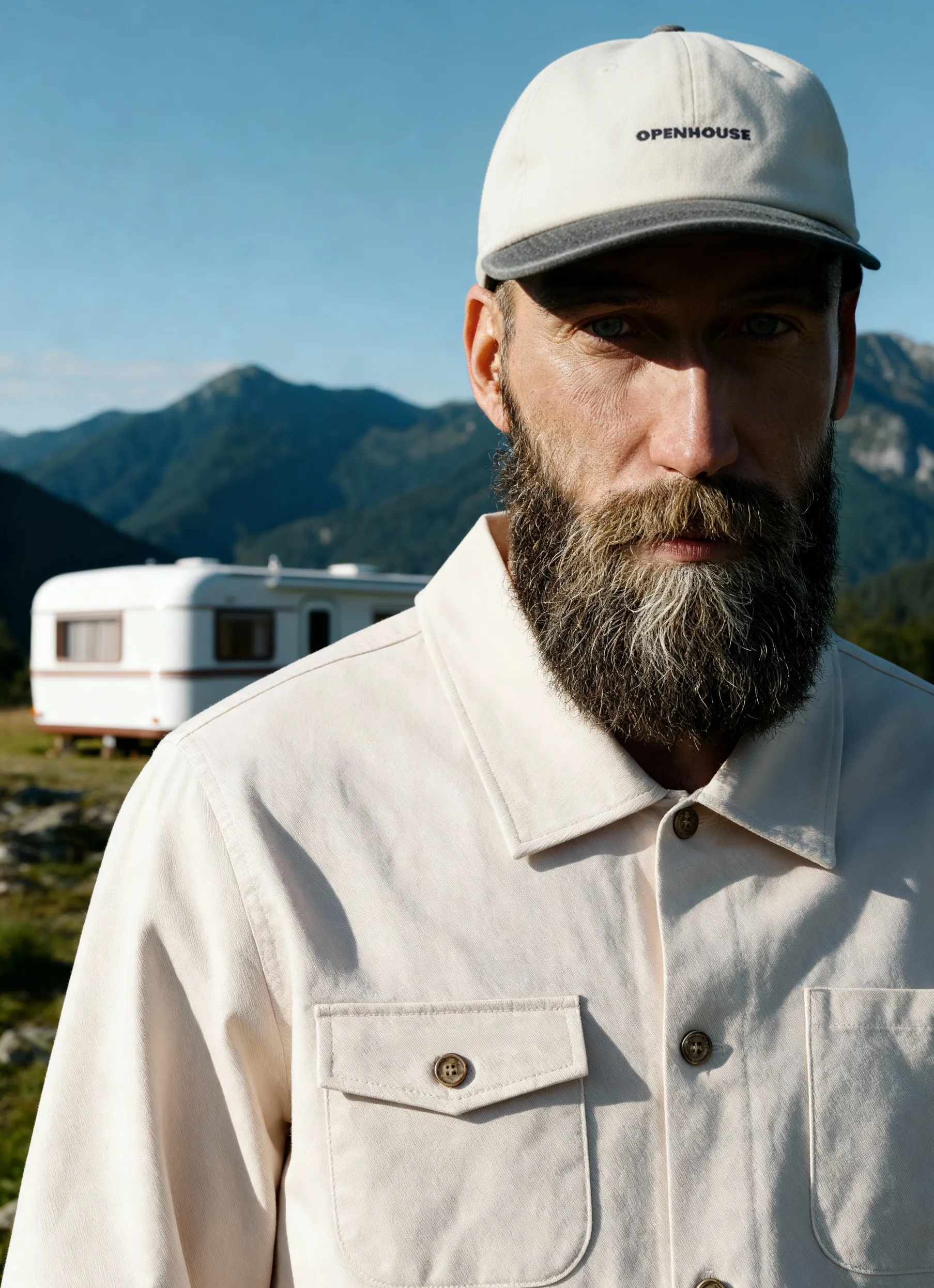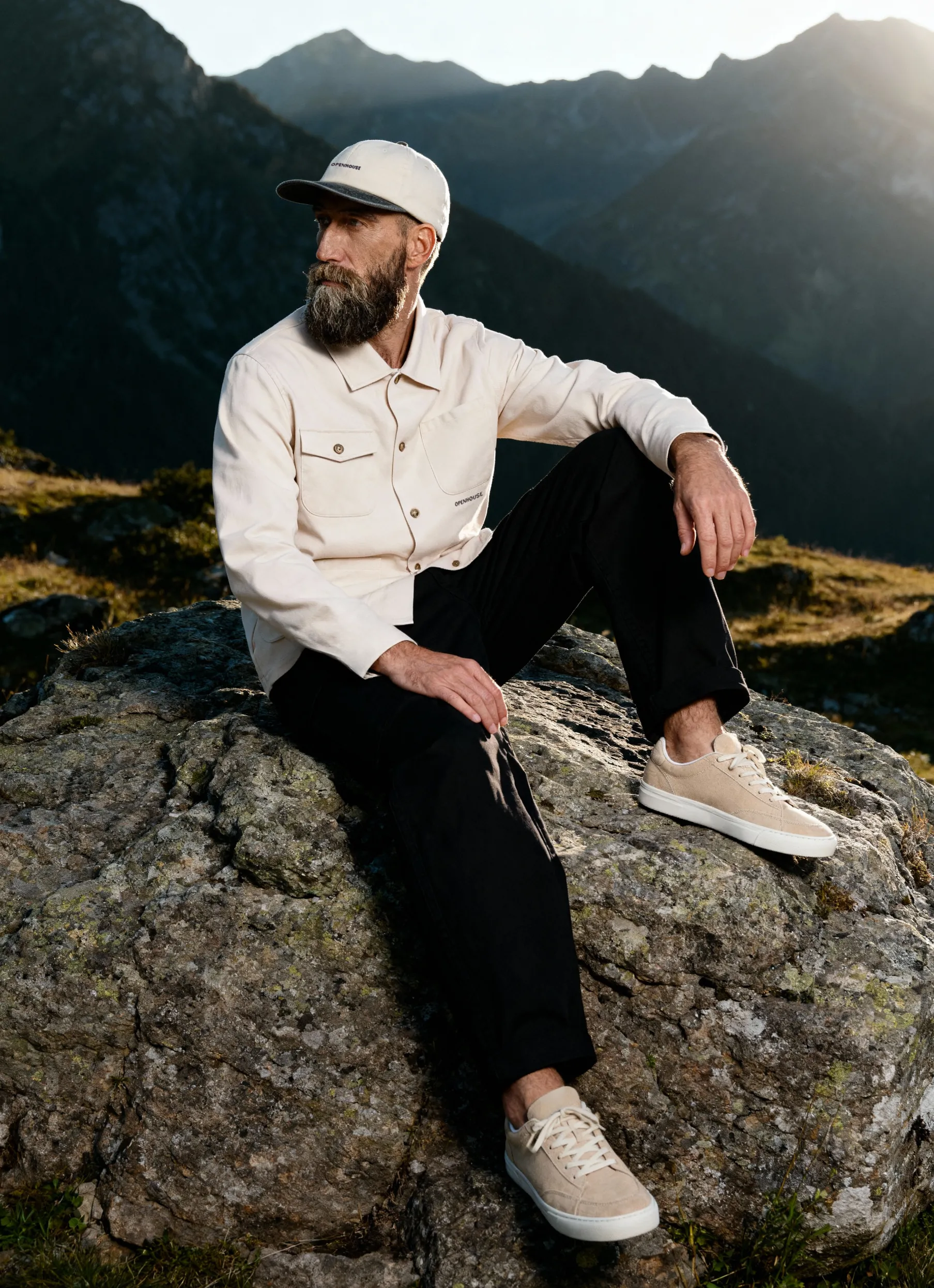


Standard catalog photography gets your products listed. Creative product photography gets them noticed. In 2026, the gap between brands that invest in standout imagery and those that settle for adequate is showing up directly in conversion rates, customer retention, and brand equity.
Creative commercial product photography sits at the intersection of artistic vision and strategic marketing. It's not about making products look pretty — it's about building visual narratives that capture attention, establish trust, and move people toward a purchase. The approach is more technically demanding and more conceptually driven than catalog work, and when it's executed well, the results are measurable.
What Makes Creative Commercial Product Photography Different
Catalog photography serves a clear purpose: to show the product accurately, consistently, and at scale. Creative product photography does something different. It builds context around the product, giving shoppers a way to see how it fits into their lives, solves a problem, or reflects an identity they want to project.
That shift requires more than technical camera skills. Photographers working at this level need to understand marketing psychology, brand positioning, and how visual decisions translate into purchase behavior. The lighting, the styling, the composition — every choice is strategic, not just aesthetic.
The Strategic Value of Creative Approaches
Brands that invest in creative photography gain advantages that compound across channels:
- Differentiation in crowded marketplaces where dozens of sellers are listing the same product category
- Higher engagement on social platforms that reward visually compelling content
- Stronger conversion metrics as shoppers develop an emotional connection with what they're buying
- Elevated perceived value that supports premium pricing
- Versatile assets that work across paid, organic, email, and retail channels simultaneously
Conceptual thinking is what separates memorable campaigns from forgettable ones. Technical execution is the baseline. The idea behind the image is what makes it work.
Essential Elements of Successful Creative Product Shoots
Concept Development and Brand Alignment
Every strong creative shoot starts with a clear conceptual foundation. Before anyone touches a camera, the team needs to understand the brand's voice, target audience, competitive positioning, and campaign objectives. The core question isn't "what should this look like?" — it's "what should this make someone feel, and what should they do next?"
The strongest concepts come out of collaborative sessions between photographers, brand managers, and marketing teams. These conversations surface the visual metaphors, color associations, and cultural references that will actually resonate with the intended audience.
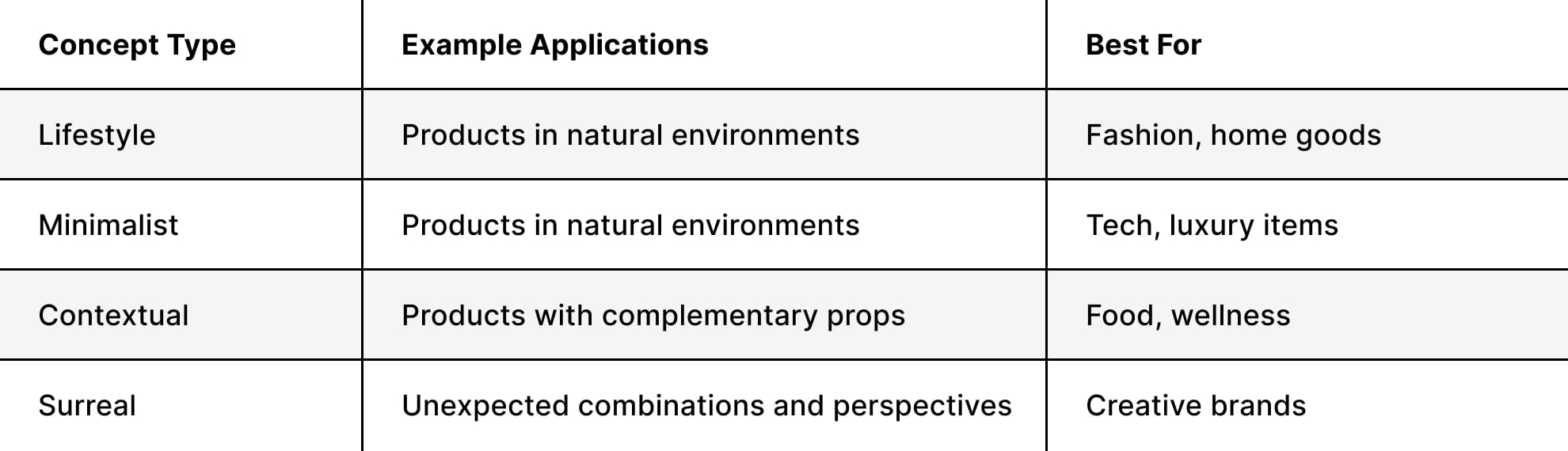
Lighting as a Creative Tool
Lighting is where technical skill and creative vision intersect most directly. Standard product photography leans on reliable three-point setups. Creative work pushes beyond that — using light to create mood, emphasize texture, suggest time of day, or build contrast that stops a scroll.
The choices communicate specific things. Soft, diffused lighting reads as approachable and warm, which works well for wellness products or anything targeting families. Hard, directional lighting introduces drama and edge, better suited to luxury goods or technical products. Colored gels shift emotional temperature. Light painting produces effects that can't be replicated any other way.
Equipment matters, but it isn't the limiting factor. Photographers consistently produce exceptional creative work with minimal gear when the conceptual thinking and technical knowledge are strong enough to compensate.
Styling and Composition Techniques
Creating Visual Narratives Through Props
Props don't decorate a shot — they contextualize it. The right selection transforms a static product image into a scene with a point of view. The discipline is in restraint: props should support the product and reinforce brand values without pulling focus away from what's actually being sold.


The same product can tell entirely different stories depending on what surrounds it. Artisanal coffee photographed with rustic wooden surfaces, vintage spoons, and fresh pastries communicates cozy and approachable. The same coffee on sleek marble with minimalist cups and clean architecture reads as urban and sophisticated. Neither is wrong — they're just speaking to different customers.
Creative product styling ideas for 2026 show how evolving aesthetic trends are influencing prop choices and compositional approaches across categories.
Compositional Approaches That Drive Engagement
Composition controls where the eye goes and what it prioritizes. In creative commercial photography, that control is deliberate and strategic:
- The rule of thirds creates balanced, naturally pleasing arrangements
- Leading lines guide viewers toward key product features
- Negative space adds breathing room and signals elegance
- Layering builds depth and dimensional interest
- Pattern disruption draws attention through intentional irregularity
Creative composition ideas demonstrate how photographers apply these principles to contemporary visual preferences without losing product clarity or commercial effectiveness.
Industry-Specific Creative Approaches
Fashion and Apparel Photography
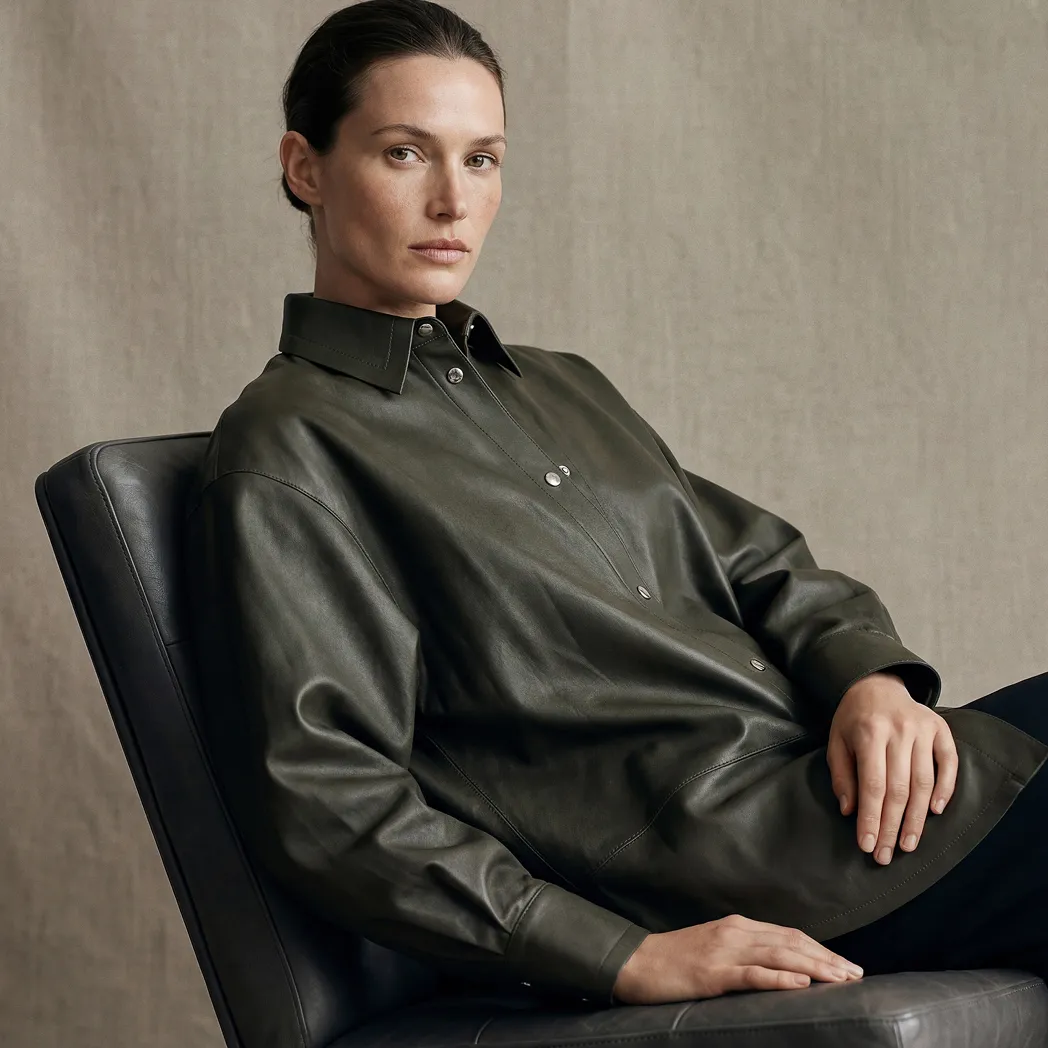
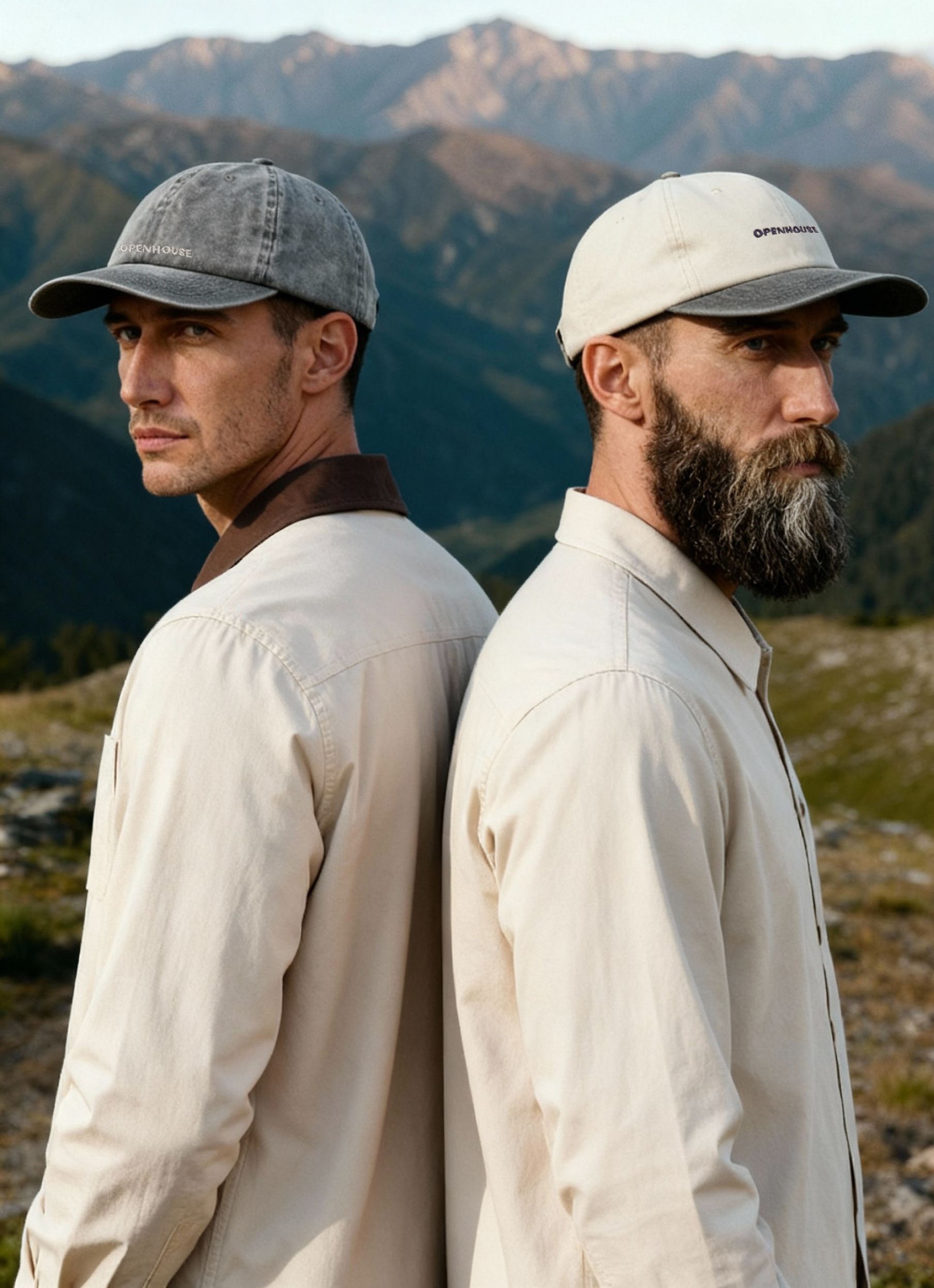
Clothing and accessory photography lives or dies on how well it conveys texture, drape, and lifestyle context. Ghost mannequin techniques handle the e-commerce baseline, giving garments a three-dimensional form without model costs. Creative eyewear photography takes a different approach, using unexpected angles, interesting backgrounds, and on-model lifestyle scenarios to communicate how pieces actually look when worn.
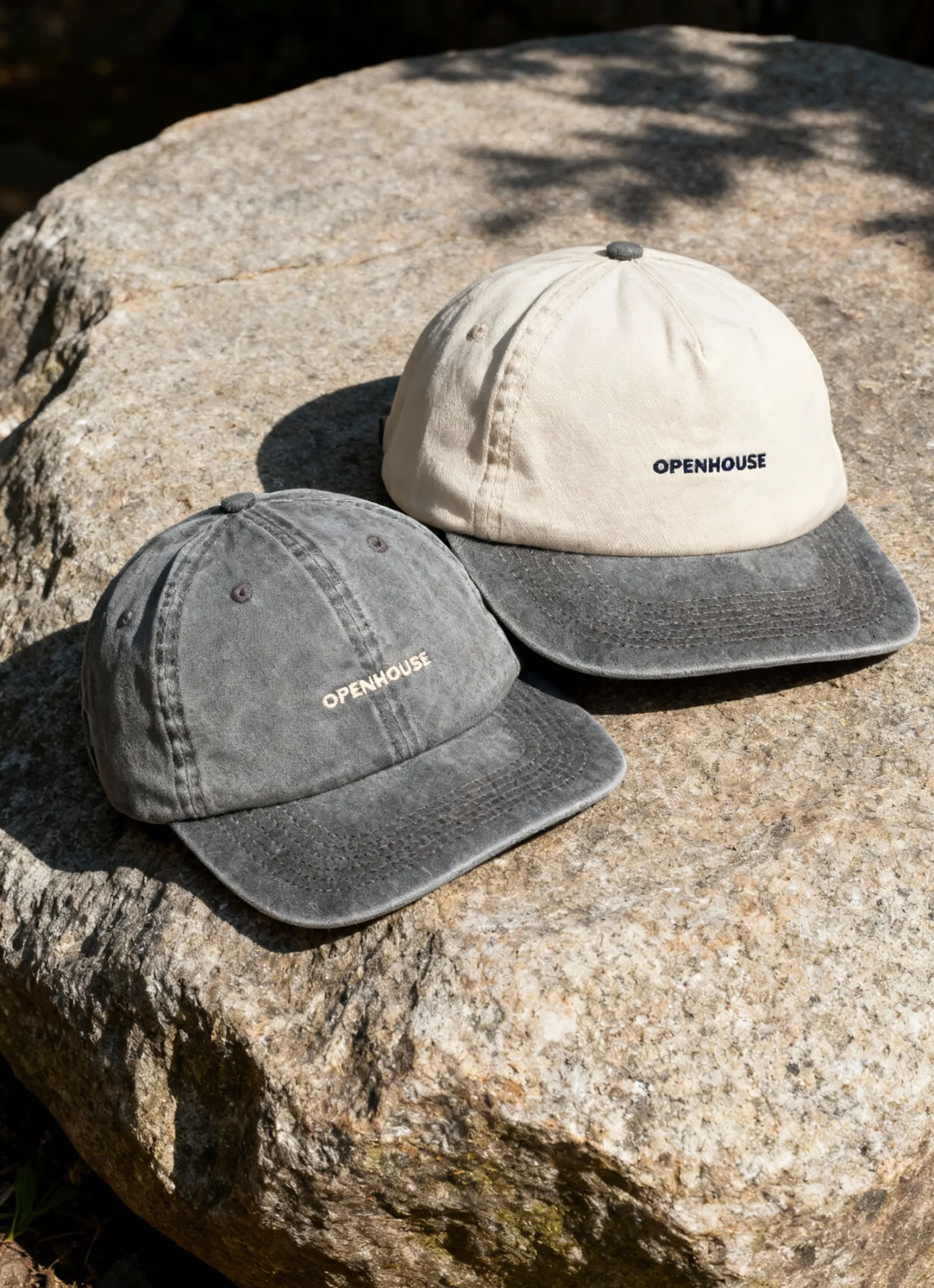
Flat lay has become the dominant format for fashion accessories on social, and for good reason. A well-executed flat lay tells a story about a complete look or curated collection in a single frame, performing consistently well on platforms where scroll speed is high and attention windows are short.
Beauty and Cosmetics Imagery
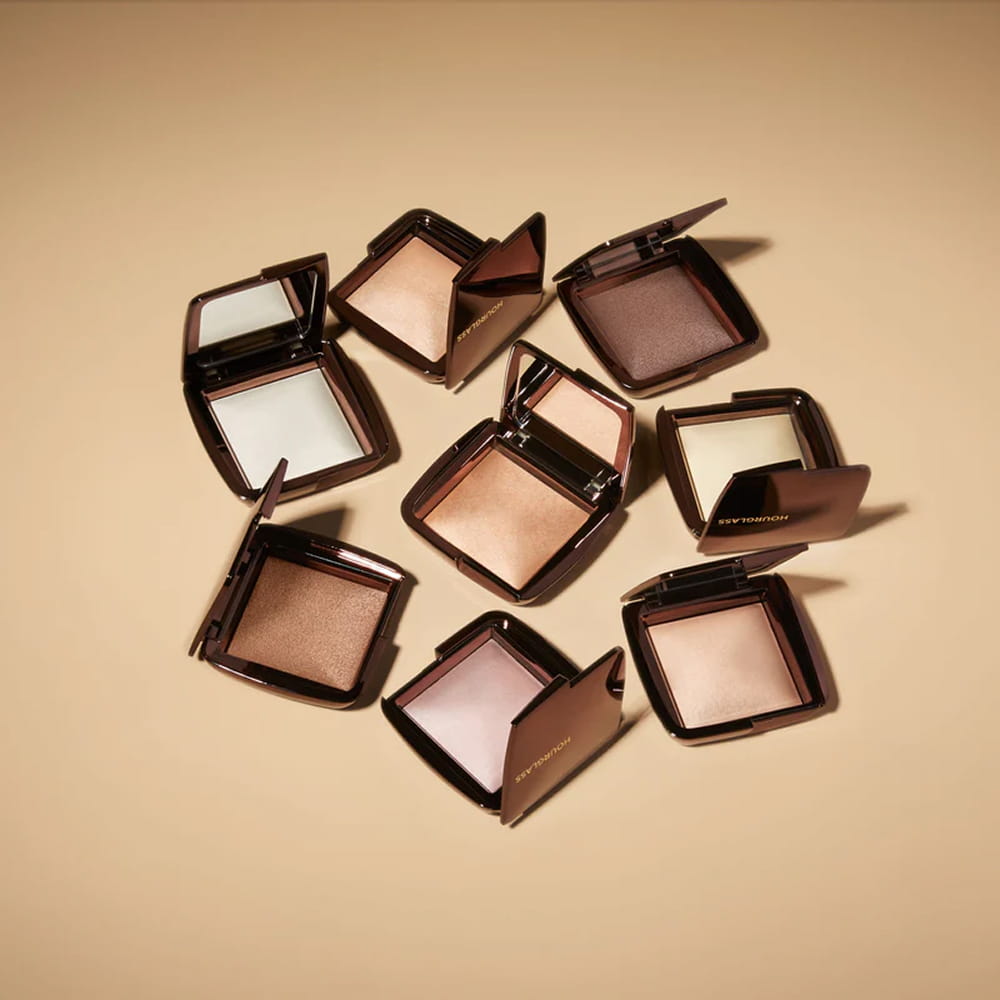
Beauty customers scrutinize before they buy. Texture, pigmentation, packaging finish — all of it gets evaluated. Close-up product photography does the heavy lifting here, revealing eyeshadow shimmer, skincare consistency, and lip color accuracy at a level of detail that builds purchase confidence.
Creative approaches range from splash photography showing moisturizers with water droplets, to ingredient-forward compositions featuring raw botanicals, to application lifestyle shots. Beauty product photography specialists understand how lighting decisions affect color accuracy and what post-production refinement is needed to ensure the product on screen matches what lands at the customer's door.
Food and Beverage Artistry
Food photography is one of the most technically demanding creative specialties. The window for a perfect shot is short — heat, humidity, and light degrade most subjects quickly — which means preparation, speed, and styling precision all need to work together simultaneously.
Commercial food work for restaurants, packaged goods, and beverage brands demands images that trigger an appetite response while accurately representing the product. Steam effects, strategic garnishing, color balancing, and background selection all contribute. Most serious productions bring in a dedicated food stylist with the specialized skills to make dishes camera-ready without crossing into misrepresentation. The collaboration between photographer and stylist is usually what separates genuinely appetizing imagery from shots that just document food.
Technical Execution and Post-Production
Camera Settings and Equipment Considerations
Equipment requirements scale with project complexity. Full-frame camera bodies deliver superior detail and low-light performance. Tethered shooting allows real-time image review during complex productions, keeping the whole team aligned on output as the shoot progresses.
Core equipment for commercial creative work:
- High-resolution camera bodies capable of capturing fine product detail
- Macro lenses for extreme close-ups that reveal texture and craftsmanship
- Standard focal lengths (50mm, 85mm) for undistorted product representation
- Wide-angle lenses for environmental and lifestyle shots
- Sturdy tripods for sharp images during longer exposures
- Color calibration tools to maintain accurate product representation throughout
Gear matters, but it's not the ceiling. Photographers who understand their equipment's limitations consistently produce strong creative work within those constraints. The thinking behind the shot determines the outcome more than the camera body capturing it.
Post-Production and Retouching Standards
Every shoot, regardless of how well-executed, requires post-production refinement. Commercial creative photography demands meticulous editing that eliminates distractions and enhances visual appeal without misrepresenting the product.
Standard post-production work includes:
- Background cleanup or replacement
- Color correction for accurate product representation
- Exposure adjustments balancing highlights and shadows
- Sharpening that enhances perceived detail without introducing artifacts
- Composite creation combining multiple exposures where needed
Advanced retouching removes dust, scratches, and manufacturing imperfections while preserving authentic product characteristics. The standard is an honest representation that holds up when the customer receives the actual product. E-commerce image standards provide a useful technical framework for ensuring final images meet platform requirements while delivering maximum visual impact.
Real-World Success Stories and Case Studies
Award-Winning Creative Concepts
The power of brilliant concepts becomes evident when examining award-winning commercial photography. These exceptional examples demonstrate how conceptual thinking elevates product imagery beyond mere documentation into the realm of artistic expression that simultaneously serves commercial objectives.
The strongest commercial creative product photography balances artistic vision with practical marketing requirements. Images must capture attention in crowded digital environments while communicating clear product benefits and maintaining brand consistency across touchpoints.
Optimizing Creative Photography for Digital Platforms
Platform-Specific Requirements and Best Practices
Every platform has its own technical requirements and aesthetic logic, and creative photography needs to account for both. Amazon prioritizes clean, informative images with strict dimension requirements. Instagram rewards lifestyle content that tells a story in a single frame. What works in one context doesn't automatically transfer to another.
Optimizing Amazon listings means balancing platform compliance with creative differentiation. Primary images follow strict guidelines, but secondary slots open up: lifestyle shots, detail views, and creative presentations that separate your listing from the competition sitting two rows above it.
The top e-commerce image types cover white background shots, lifestyle contexts, detail macros, scale indicators, packaging presentations, and 360-degree views. Effective product pages combine these formats strategically, addressing different customer questions at different stages of the purchase decision rather than leading with one format and hoping it covers everything.
Mobile-First Visual Strategies
Mobile commerce is where most purchasing decisions happen in 2026. Creative photography needs to hold up at smaller sizes, with focal points clear enough to read on a smartphone screen without pinching to zoom. A concept that looks striking on a desktop monitor can lose its impact entirely when viewed on a 6-inch display.
Test how creative work translates to mobile before it goes live. Product image display strategies cover the technical side: load times, zoom functionality, and gallery navigation, all of which affect conversion rates in ways that creative decisions alone can't compensate for.
Budget Considerations and Pricing Models
Understanding Professional Photography Investments
Creative product photography is a real investment. It's also one with measurable returns: higher conversion rates, lower return rates, and stronger brand perception across every channel where your imagery appears. Pricing reflects complexity, licensing terms, production requirements, and photographer experience.
The variables that drive cost include shot complexity, styling requirements, location needs, model usage, and post-production intensity. A clean white background catalog shot costs considerably less than a lifestyle production requiring a location, models, props, and full creative direction. That gap exists because the work involved is genuinely different.
Subscription models and per-image pricing structures give brands budget predictability while maintaining consistent visual quality across product lines — useful for operations managing regular launches or large catalogs.
In-House vs. Professional Studio Partnerships
Building an in-house studio gives you control and can reduce per-image costs at high volume. It also requires significant upfront capital, dedicated space, trained staff, and ongoing operational overhead that compounds over time.
Professional studio partnerships provide immediate access to experienced photographers, diverse equipment, production expertise, and creative perspective without the capital commitment. They also scale. Volume goes up during peak seasons, down during slow periods, without the fixed overhead that comes with an internal team. For most brands, that flexibility is worth more than the per-image savings an in-house setup might eventually deliver.
Emerging Trends and Technologies
AI Integration in Commercial Photography
AI has become a practical part of commercial product photography workflows in 2026, not a replacement for them. AI-generated product images now supplement traditional photography for specific applications: background variations, lifestyle context generation, and seasonal adaptations from original product shots.
The best AI tools for product photos handle background removal, image enhancement, and creative variations efficiently while preserving photographic authenticity. The operative word is supplement. For hero images and primary marketing assets, professional photography remains the standard that AI output is measured against, not replaced by.
For brands exploring content alternatives, AI-generated UGC-style advertisements offer rapid testing capabilities at low cost. They work well for iteration and experimentation. For building genuine brand trust and emotional connection with customers, authentic photography still carries more weight.
Sustainable and Ethical Production Practices
Consumer expectations around brand responsibility have raised the bar for how photography productions are run. Digital backgrounds reduce physical waste. Local prop sourcing cuts transport overhead. Efficient shooting schedules minimize resource consumption across the board.
Beyond operational choices, some brands actively embed sustainability values into their creative direction: natural settings, earth-tone palettes, visible ethical production elements that communicate something specific about how the brand operates. For conscious consumers, that visual language registers. It's differentiation that doesn't require a separate campaign — it's built into the imagery itself.
Working With Professional Photography Studios
Selecting the Right Photography Partner
Choosing a studio for creative commercial work comes down to four things: technical capability, creative vision, production experience, and how they communicate. Portfolio review is non-negotiable — look for demonstrated versatility across product categories and consistency in output quality, not just a handful of strong hero shots.
Understanding how professional studios work clarifies what to expect around workflows, timelines, and collaboration. The best studios maintain clear communication throughout: shot lists, proofing processes, and defined revision procedures that keep projects on track and on brief.
Key selection criteria:
- Portfolio quality demonstrating relevant category experience
- Production capabilities matched to your project scope
- Turnaround times that align with your launch schedule
- Transparent pricing and flexible package structures
- Clear retouching standards and revision policies
- Straightforward rights and licensing terms
Preparing for Successful Shoots
Preparation determines outcomes as much as execution does. Give your photographer everything they need to make commercially effective creative decisions: target audience profile, brand guidelines, competitive context, and the specific marketing applications each image will serve. The more they understand the business objective behind the brief, the better the output aligns with what you actually need.
On the practical side: products should arrive clean and undamaged, props and styling elements should be confirmed in advance, and any features requiring specific emphasis should be called out clearly before shoot day. Brands that build long-term relationships with photography partners benefit from accumulated institutional knowledge — studios that know your products and brand identity deliver increasingly refined results without the ramp-up time a new vendor requires every engagement.
Maximizing ROI From Creative Photography Investments
Content Repurposing and Multi-Channel Utilization
A well-executed creative shoot doesn't produce one campaign's worth of content — it produces a visual library. E-commerce listings, social media, email, print catalogs, paid advertising, and packaging can all draw from the same shoot when it's planned with that scope in mind.
The key is identifying every potential application before shoot day, not after. When photographers know upfront which variations, angles, and formats the business needs, they capture everything in a single session. That planning prevents costly reshoots and builds a comprehensive asset base that supports marketing across the full product lifecycle.
Performance Measurement and Optimization
Track what the photography is actually doing. A/B testing creative lifestyle images against standard catalog shots reveals which approaches convert with specific customer segments. Engagement rates, conversion improvements, and sales attribution data justify the investment and sharpen future creative decisions.
The most effective brands treat creative photography as an iterative process. Performance data informs the next brief. Visual trends and platform requirements shift, and the brands that stay current outperform those running on imagery that made sense two years ago. Businesses looking to convert that visual interest into a qualified pipeline can explore complementary approaches like lead generation strategies that systematize follow-up after the first impression lands.
Strong creative photography is one of the few marketing investments that compounds. It builds brand recognition, supports conversion across every channel, and raises the perceived value of everything you sell. Whether you're launching a new product line or refreshing imagery that's stopped performing, professional creative photography delivers returns that outlast any single campaign.
Squareshot combines creative direction, technical precision, and reliable turnaround across catalog, lifestyle, and full creative productions built around what your brand actually needs.
Product A
SQUARE SHOT