

E-commerce brands run into the same wall: thousands of product images to produce, with consistency, quality, and speed all expected at once.
Traditional photography workflows can deliver great results, but they weren't built for the volume modern online retail demands. Automated product photography changes that. It combines robotics, AI, and smart software to reshape how businesses capture product images. It's not replacing photographers, it's giving them a way past the scalability problem that's dogged the industry for years.
What Is Automated Product Photography and How Does It Work
Automated product photography means systems that use robotic equipment, software controls, and AI to capture, edit, and deliver product images with barely any manual work. That covers everything from a simple turntable and camera trigger to full multi-camera rigs run by dedicated software platforms.
The core setup usually includes motorized equipment for positioning products, camera control systems that keep capture settings consistent, and software that handles image processing. Traditional setups mean a photographer adjusting each shot by hand. Automated systems run a set workflow instead, so every product gets the same lighting, angles, and composition, no drift, no guesswork.
The Technology Behind the Automation
Modern automated product photography workflows lean on several technologies working together. Robotic arms or precision turntables position products with millimeter accuracy. Programmable lighting keeps things perfectly consistent across thousands of shots. Camera control software handles exposure, focus, and timing, often firing off multiple angles in rapid succession.
AI and machine learning now sit at the center of it all. Background removal, color correction, even SKU tagging, all of it happens automatically, cutting post-production from hours down to minutes. Some of the more advanced platforms can even suggest compositions based on product type and industry standards.
Benefits That Transform Your Product Photography Operations
The advantages of automated product photography extend far beyond simple speed improvements.
Consistency ranks as the primary benefit most brands experience. When every image follows identical lighting setups, angles, and post-processing steps, your entire catalog maintains a cohesive visual identity. This consistency directly impacts customer trust and conversion rates, as shoppers navigate a predictable, professional browsing experience.
Cost Efficiency at Scale
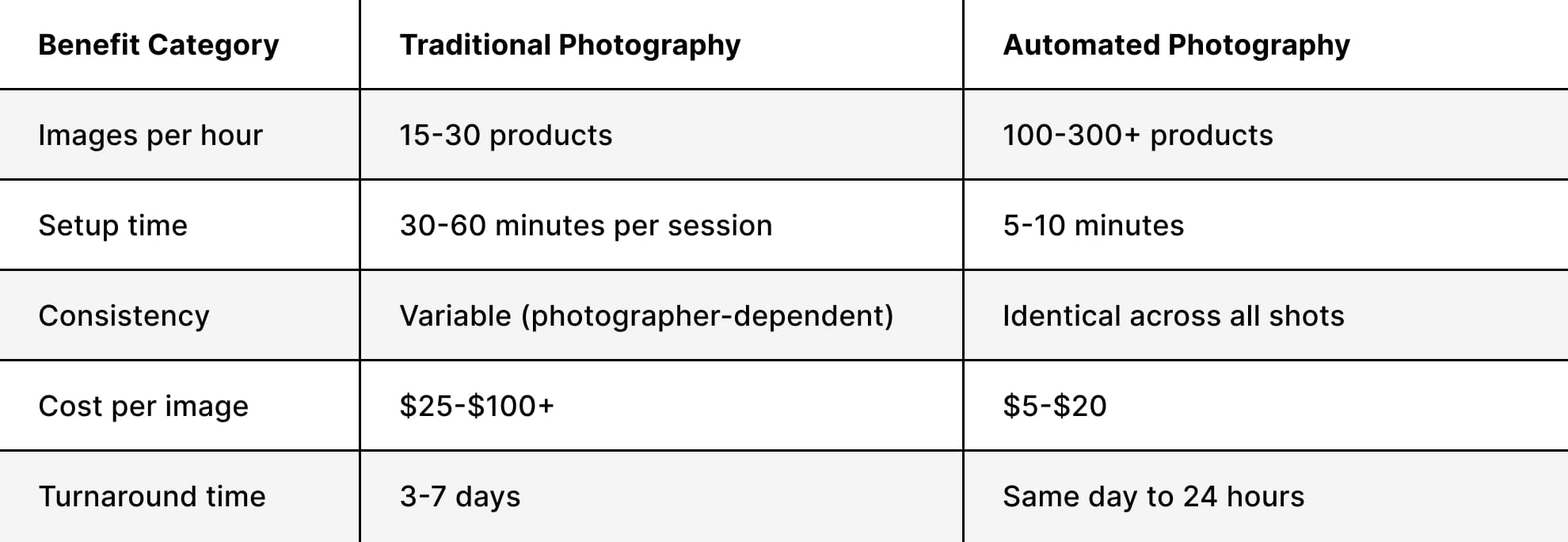
While initial investment in automated systems can be substantial, the per-image cost drops dramatically as volume increases. A brand photographing 10,000 SKUs annually might spend $500,000 with traditional methods, but reduce that to $100,000-$150,000 with automation. These savings compound when you factor in faster time-to-market and reduced storage needs for physical samples.
Speed matters enormously in competitive e-commerce markets. Products can move from receiving dock to live website in hours rather than weeks, enabling faster inventory turnover and a more agile response to market trends. This velocity advantage often translates directly to revenue growth — a critical edge as product photography trends shift rapidly in 2026.
Types of Automated Product Photography Solutions
The automated product photography market offers solutions for virtually every business size and product category. Understanding these options helps brands select systems aligned with their specific needs.
Entry-level turntable systems represent the most accessible automation. These typically pair a motorized rotating platform with smartphone or DSLR camera triggers, creating 360-degree product spins automatically. Best suited for smaller items like jewelry, cosmetics, or accessories, these systems cost $1,000-$5,000 and require minimal technical expertise.


Mid-Range Multi-Camera Rigs
Mid-tier solutions employ multiple synchronized cameras capturing different angles simultaneously. These commercial product photography setups often include integrated lighting arrays and software that compiles images into standardized templates. Apparel brands particularly benefit from these systems, as they capture front, back, and detail shots in a single product placement.
- Throughput: 50-150 products per hour
- Investment: $25,000-$75,000
- Best for: Apparel, footwear, accessories
- Technical requirements: Moderate (training needed)
High-end robotic systems represent the apex of automated product photography technology. These installations feature industrial-grade robotic arms capable of positioning products with extreme precision while multi-camera arrays capture from dozens of angles. AI-powered software orchestrates the entire workflow, from initial capture through final retouching and delivery.
Implementation Considerations for Different Product Categories
Not all products suit automation equally well. Understanding how different categories interact with automated systems helps set realistic expectations and choose appropriate solutions.
Hard goods like electronics, housewares, and furniture photograph exceptionally well with automated systems. Their rigid structures maintain consistent positioning, and standardized angles highlight features effectively. Many brands achieving success with furniture photography automation report a reduction in production time.
Soft Goods and Styling Challenges
Apparel and textiles present unique challenges for automation. Fabric drapes differently with each handling, seams may misalign, and styling details require human judgment. However, innovative brands are finding that hybrid approaches work best. Automated systems handle the heavy lifting of capturing standard angles, while photographers focus on creative styling and composition that requires artistic interpretation.
When planning a photo shoot for clothing brands, consider which elements benefit from automation versus which require human creativity. Standard catalog shots often automate beautifully, while lifestyle and model photography still demands skilled photographers and art directors.
The Role of AI in Modern Automated Photography
Artificial intelligence has evolved from a futuristic concept to an essential component of automated product photography. Today's AI systems handle tasks that previously required skilled retouchers, and AI-powered photography tools continue advancing rapidly.
Background removal once consumed hours of manual labor, but now happens instantly with AI algorithms that distinguish products from backgrounds with near-perfect accuracy. These systems learn from millions of examples, understanding complex edge cases like transparent glass, fine hair, or intricate lace details.
Color correction and white balance adjustment represent another area where AI excels. By analyzing product materials and lighting conditions, AI can standardize color representation across entire catalogs, ensuring your navy blue blazer looks identical whether photographed in January or July.
Advanced AI Applications
Beyond basic editing, AI now handles increasingly sophisticated tasks. Shadow generation creates realistic product shadows that ground items visually without requiring complex lighting setups. Perspective correction ensures products appear true-to-life regardless of lens distortion. Some platforms even offer AI-powered virtual staging, placing products in lifestyle contexts without physical set construction.
Brands exploring whether to use AI product images should understand that AI complements rather than replaces professional photography. The most effective approaches combine automated efficiency with human oversight for quality assurance and creative direction.
This is exactly how Squareshot's AI services work. The product is always shot for real, then AI extends it into models, scenes, props, and backgrounds, with a post-production team refining every result to commercial standards before delivery. The product stays real. AI just handles the speed and scale.
Integrating Automation with Existing Photography Workflows
Successfully implementing automated product photography requires thoughtful integration with your current operations rather than wholesale replacement. Most brands benefit from hybrid approaches that leverage automation's strengths while preserving human expertise where it matters most.
Start with your highest-volume, most standardized products. These items typically generate the strongest ROI from automation while minimizing implementation risks. Electronics accessories, basic apparel items, and consumable goods often serve as ideal pilot programs.
Building a Hybrid Studio Approach
Modern product photography workflows increasingly incorporate both automated and traditional capabilities within the same facility. Automated stations handle routine catalog shots, while traditional bays accommodate creative campaigns, seasonal lookbooks, and products requiring special handling.
This dual approach maximizes efficiency without sacrificing creative quality. Your team can process standard SKUs at unprecedented speed while allocating photographer time and creative energy to shots that truly require human artistry, such as flat lay photography or conceptual product styling.
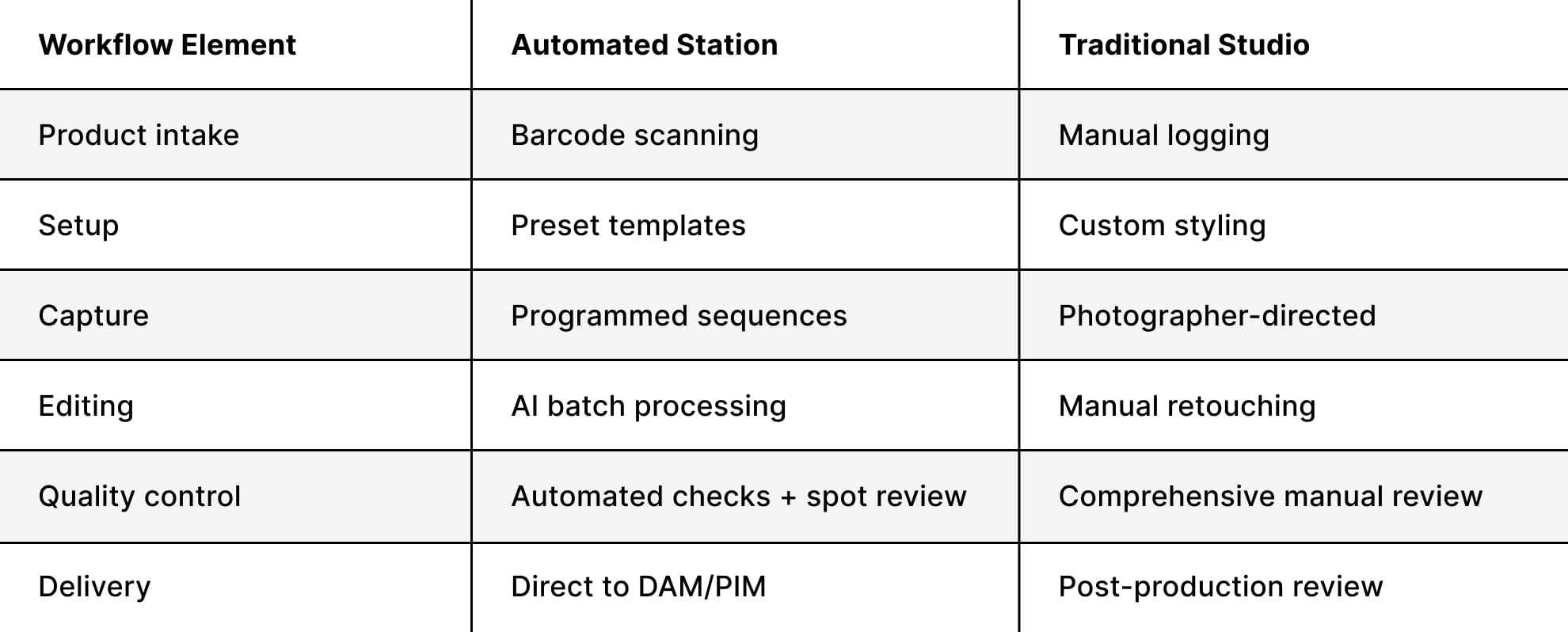
Communication between automated and traditional systems proves crucial. SEO automation platforms have demonstrated how interconnected digital workflows streamline operations, and similar principles apply to photography production. Your automated system should integrate seamlessly with digital asset management, inventory systems, and e-commerce platforms.
Quality Control and Maintaining Brand Standards
One concern brands frequently express about automated product photography involves quality consistency and brand alignment. Legitimate questions arise: Can automated systems truly maintain the visual standards our brand requires? How do we ensure quality doesn't suffer in pursuit of speed?
The answer lies in rigorous initial setup and ongoing monitoring. Automated systems excel at replicating precisely what they're programmed to do. Therefore, your initial template creation and system calibration become critical. Work with experienced photographers to establish lighting setups, angles, and compositions that reflect your brand identity, then encode those standards into your automated workflow.
Establishing Quality Checkpoints
Implement systematic quality reviews at strategic intervals. Early in implementation, review every batch of automated images to identify and correct systematic issues. As confidence builds, transition to sampling-based reviews while maintaining exception reports that flag images outside predetermined parameters.
Many brands find that the best product photography services now offer hybrid models, where automated capture combines with professional quality control and selective manual enhancement. This approach ensures consistency while maintaining the flexibility to address unique product needs.
Consider product-specific requirements when configuring automated systems. Jewelry photography demands different technical specifications than apparel or housewares. Your automated system should accommodate these variations through product-category-specific templates and settings.
Platform Requirements and E-Commerce Integration
Automated product photography delivers maximum value when seamlessly integrated with your broader e-commerce technology stack. Understanding platform requirements and integration capabilities ensures your investment translates to actual business results.
Different platforms impose specific image requirements. Amazon, Shopify, and proprietary e-commerce systems each have distinct specifications for dimensions, file formats, and naming conventions. Your automated solution should accommodate these variations, ideally outputting multiple versions simultaneously to serve different channels.
Technical Specifications Across Platforms
Shopify product image requirements differ from Amazon product image dimensions, and maintaining separate manual workflows for each platform creates inefficiency. Automated systems can generate platform-specific variants from a single capture session, ensuring compliance while minimizing redundant work.
- File naming conventions: Automated SKU-based naming
- Dimension variants: Simultaneous export at multiple sizes
- File formats: JPEG, PNG, WebP as needed
- Color profiles: sRGB for web consistency
- Metadata: Automated tagging with product attributes
Understanding e-commerce image standards helps configure your automated system for optimal performance across channels. Consistent image sizing, appropriate resolution, and proper color management directly impact page load times and conversion rates.
Integration with Product Information Management (PIM) and Digital Asset Management (DAM) systems creates powerful workflow synergies. As automated photography completes, images flow directly into your asset library with proper categorization, metadata, and associations to relevant SKUs, eliminating manual file handling.
Cost Analysis and ROI Calculations
Understanding the true cost and return on investment for automated product photography requires looking beyond initial system prices to comprehensive operational analysis.
Initial capital investment varies dramatically based on system sophistication. Entry-level solutions start around $3,000-$5,000, mid-range multi-camera setups run $25,000-$75,000, and high-end robotic systems can exceed $200,000. However, these figures represent only part of the total cost equation.
Total Cost of Ownership
Include ongoing operational expenses such as software subscriptions, maintenance contracts, periodic calibration, and staff training. Most automated systems require dedicated operators initially, though staffing needs typically decrease as teams gain proficiency.
Compare these costs against your current photography expenses. Calculate not just per-image cost but also opportunity costs from delayed product launches and revenue loss from out-of-stock items awaiting photography. Many brands discover that even modest automation reduces their total photography costs by 40-60% while dramatically improving throughput.
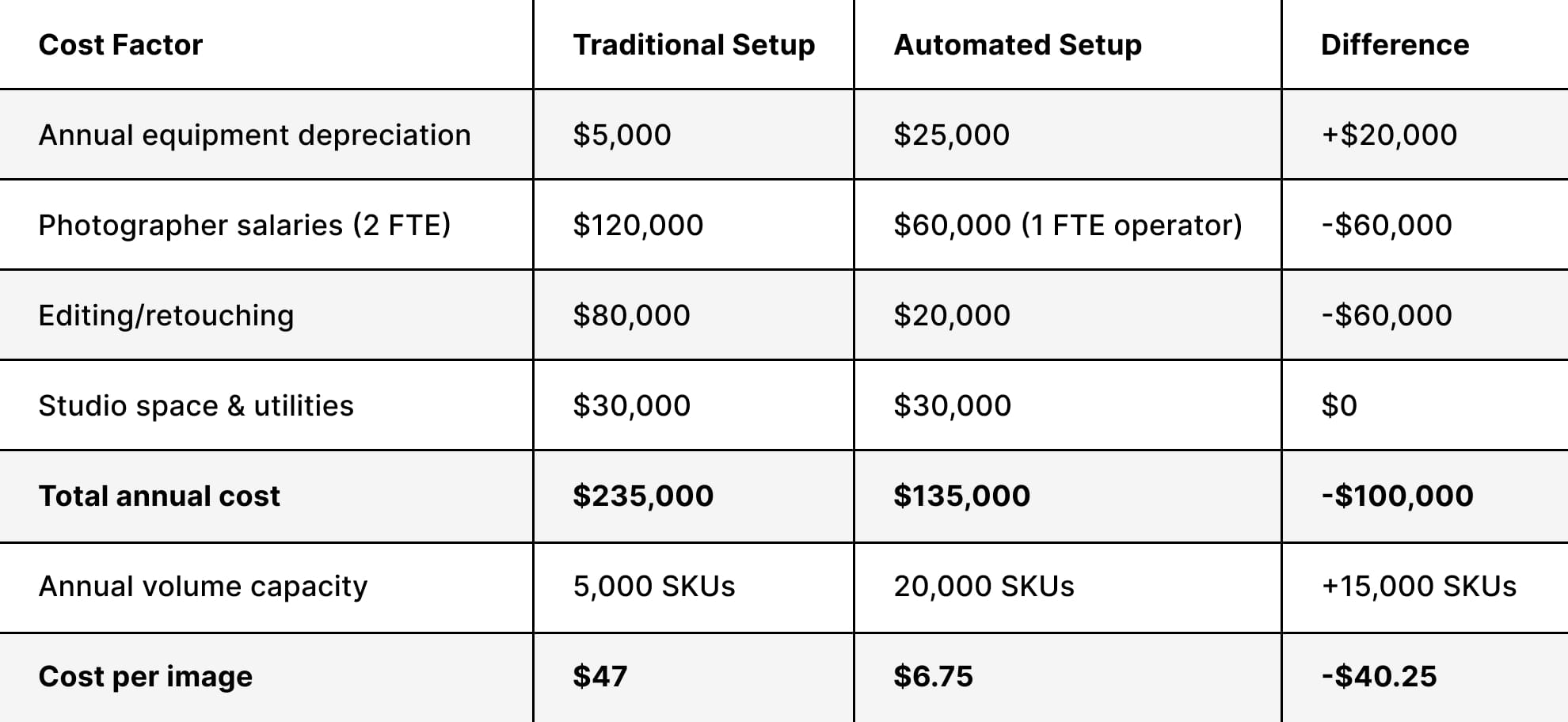
ROI calculations should account for revenue acceleration from faster time-to-market. Products photographed and listed weeks earlier generate additional sales cycles throughout the year. For seasonal merchandise, especially, this timing advantage often justifies automation investment independent of direct cost savings.
Choosing the Right Automated Solution for Your Business
With numerous automated product photography solutions available, selecting the right system requires careful evaluation of your specific needs, constraints, and growth trajectory.
Start by assessing your product mix and volume requirements. A fashion brand photographing 500 new styles monthly needs different capabilities than an electronics retailer with 50 weekly product updates. Product characteristics matter enormously — photographing watches requires different precision than capturing beverage photography.
Key Selection Criteria
Evaluate potential solutions against these critical factors:
- Product compatibility: Can the system handle your full product range, including the largest and smallest items?
- Throughput requirements: Does capacity match your current volume plus a reasonable growth projection?
- Quality standards: Do sample images meet your brand's visual expectations?
- Integration capabilities: Will the system connect with your existing technology stack?
- Scalability: Can you expand capacity without replacing the entire system?
- Support and training: What ongoing assistance does the vendor provide?
Many specialized product categories benefit from tailored approaches. Eyewear photography demands particular attention to reflection control, while watch photography requires precision in highlighting mechanical details. Ensure your chosen system accommodates these nuances.
Don't overlook the importance of vendor support and community resources. Established platforms typically offer comprehensive training programs, active user communities, and responsive technical support that prove invaluable during implementation and scaling phases.
Future Trends Shaping Automated Photography
The automated product photography landscape continues evolving rapidly, with several emerging trends poised to reshape the industry further in the coming years.
Advanced AI capabilities will expand beyond current editing functions into creative decision-making. Systems increasingly suggest compositions, lighting adjustments, and styling variations based on product type and competitive analysis. Research into narrative product grid collages demonstrates how AI can create cohesive visual storytelling across product collections.
Emerging Technologies and Capabilities
Virtual photography represents perhaps the most disruptive emerging trend. Rather than physically photographing products, brands increasingly generate photorealistic 3D renders from CAD files or photogrammetry scans. This approach enables unlimited angle variations, lighting scenarios, and context placements without physical product handling. While not technically "photography," these virtual workflows share automation's core benefits: consistency, scalability, and cost efficiency.
Augmented reality integration connects automated photography to immersive customer experiences. As AR shopping becomes mainstream, automated capture systems increasingly generate not just static images but 3D models and texture maps that enable virtual product placement in customer environments.
Cloud-based processing democratizes access to sophisticated automation. Rather than investing in on-premise equipment, brands can ship products to specialized photography facilities equipped with cutting-edge automated systems, receiving finished images within days at subscription-based pricing. This model particularly benefits smaller brands lacking capital for system purchases.
How automated photography is transforming e-commerce extends beyond simple efficiency gains to fundamentally reshaping customer experiences and operational models. The brands achieving the greatest success view automation not as cost-cutting but as strategic capability building that enables previously impossible scale and consistency.
Hybrid Approaches and Human Expertise
Despite automation's tremendous capabilities, the most successful photography operations in 2026 recognize that human expertise remains irreplaceable for certain applications. The optimal approach typically combines automated efficiency with strategic human creativity.
Reserve photographer talent for high-value applications where artistic vision creates meaningful differentiation. Campaign photography, seasonal lookbooks, and hero shots benefit enormously from skilled photographers who understand lighting, composition, and emotional resonance in ways AI cannot yet replicate.
Meanwhile, deploy automation for standardized catalog imagery where consistency and efficiency deliver maximum value. This division of labor optimizes both cost efficiency and creative quality, ensuring your photography investment generates optimal returns across different content types.
Training and Skill Development
As automation handles routine technical tasks, photographer roles evolve toward creative direction, system supervision, and quality assurance. Forward-thinking studios invest in training programs that develop both technical automation proficiency and enhanced creative skills. Photographers become automation specialists who understand how to maximize system capabilities while recognizing situations requiring manual intervention.
Businesses should also consider how automation affects their broader visual content strategy. With cost-per-image declining dramatically, brands can afford more comprehensive visual documentation, capturing additional angles, detail shots, and variations that previously seemed cost-prohibitive. This abundance enables richer product presentations and more effective close-up product photography that helps customers make confident purchase decisions.
Implementation Strategy and Change Management
Successfully implementing automated product photography requires more than just purchasing equipment. Thoughtful change management ensures smooth transitions and team adoption.
Begin with comprehensive workflow documentation of your current photography process. Map every step from product receipt through final image delivery, identifying bottlenecks, redundancies, and quality control points. This baseline documentation helps you measure improvement and ensures nothing critical gets overlooked during transition.
Pilot programs minimize risk while generating proof of concept. Select a product category representing meaningful volume but not mission-critical to your business. Run parallel workflows — automated and traditional-comparing results, costs, and timelines. This data-driven approach builds confidence and identifies optimization opportunities before full-scale rollout.
Team Training and Buy-In
Involve your photography team early in evaluation and selection processes. Their practical insights about workflow challenges and quality requirements prove invaluable. Moreover, inclusion builds buy-in and reduces resistance to change. Frame automation as not a job elimination but a capability enhancement that elevates photographer roles from repetitive technical work to creative problem-solving.
Establish clear success metrics aligned with business objectives. Beyond obvious measures like throughput and cost-per-image, track downstream impacts such as time-to-market, conversion rates for products with automated photography versus traditional, and customer return rates. Comprehensive measurement reveals automation's full value and guides continuous improvement.
Whether you're photographing fifty SKUs or fifty thousand annually, the right automation approach can transform your visual content operations and accelerate your brand's growth. Squareshot specializes in helping brands navigate these technology decisions while delivering product photography through both cutting-edge automated systems and traditional creative expertise, ensuring your visual content strategy positions you for success regardless of which approach best serves your unique requirements.
Product A
SQUARE SHOT