

Text alone doesn't cut it anymore. Consumers process visuals 60,000 times faster than written content, and brands are competing for that attention every day. Visual content production has become a core part of how businesses communicate value and connect with their audience.
Whether you're launching a new product line or refreshing your brand identity, understanding what goes into visual content production is what helps you make imagery that actually converts.
Understanding Visual Content Production in 2026
Visual content production covers the whole process: creating, editing, and distributing images and video for commercial use. It's come a long way from the early days of a simple product shot on a white background.
Today, it takes strategic planning, technical execution, and real post-production work. The process starts with understanding your brand's visual identity, then moves through shooting, editing, and optimizing assets for every platform they'll live on. Research on visual content creation fundamentals shows modern workflows blending traditional photography with newer technology to cover the full range of content needs.
Key components of effective visual content production include:
- Pre-production planning and concept development
- Technical execution with proper lighting and composition
- Professional editing and retouching
- Format optimization for different channels
- Asset management and distribution systems
Aligning visual content with your branding matters more than most brands realize. Consistency across every visual touchpoint builds recognition and trust. Inconsistency does the opposite: it creates confusion and waters down your brand.
Types of Visual Content for Product Marketing
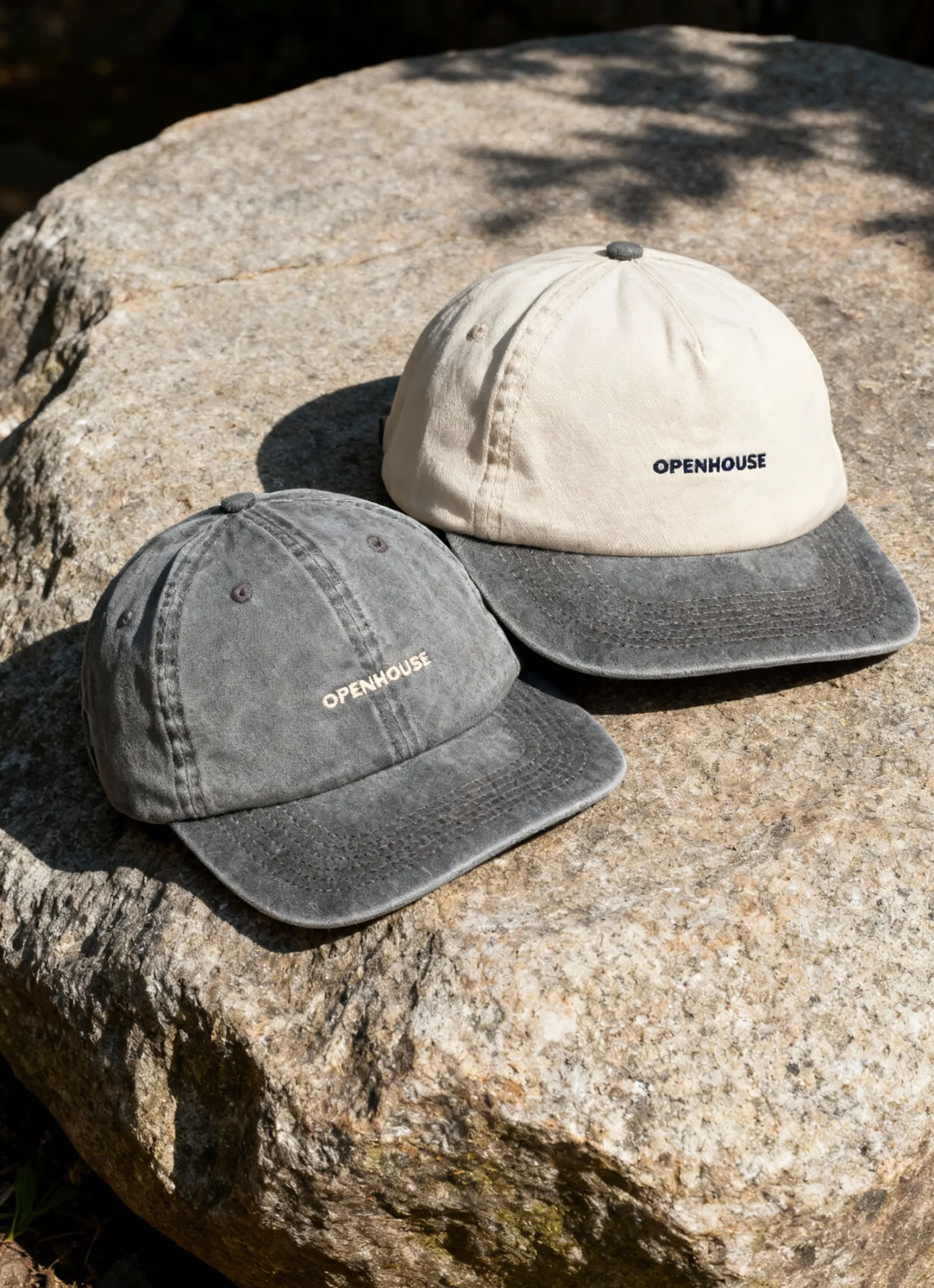
Different products and platforms call for different visual approaches. Catalog photography keeps the focus on accurate product representation with neutral backgrounds, built for e-commerce listings. Creative shoots bring in props, lifestyle elements, and storytelling to show products in context.
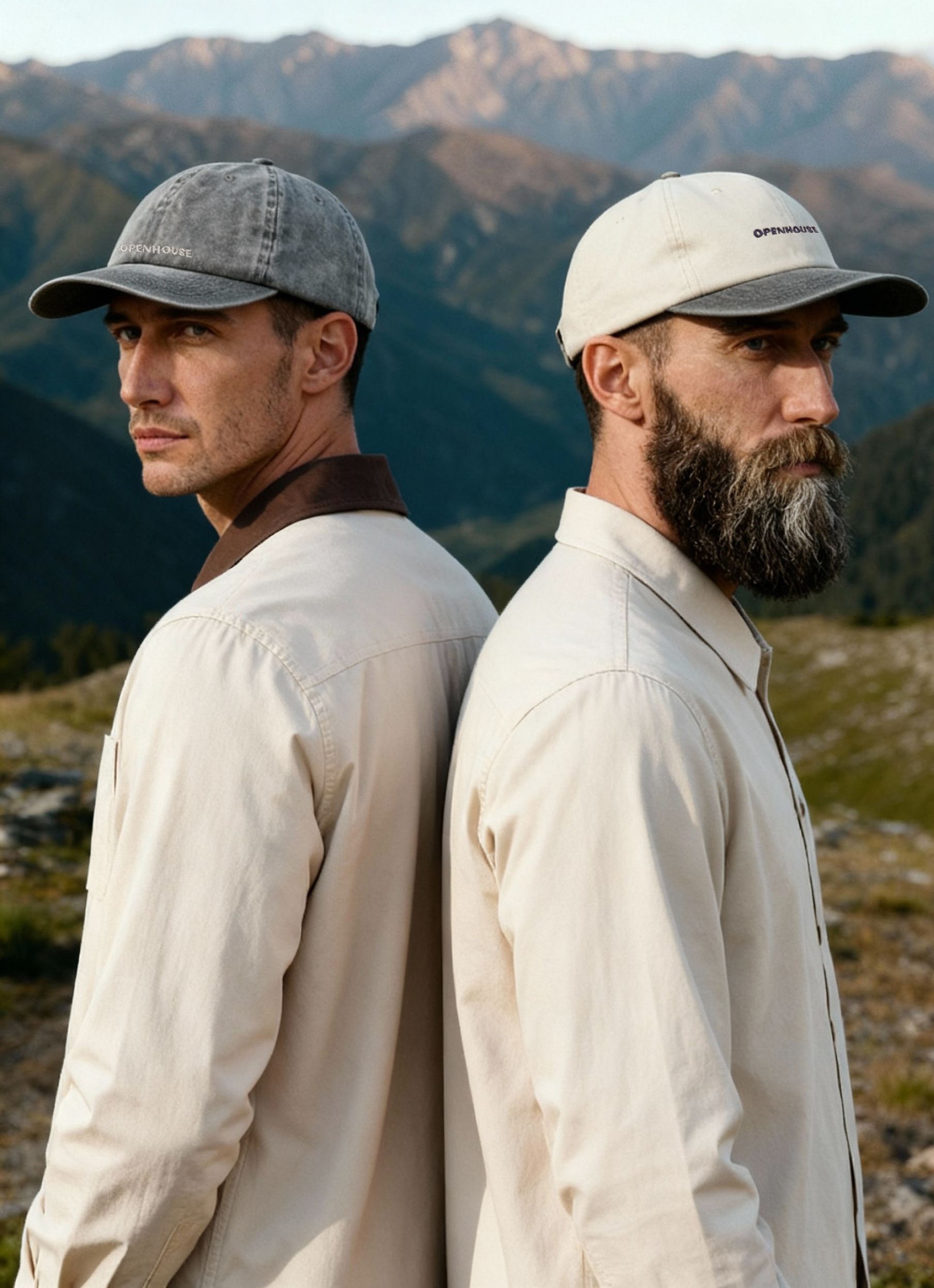
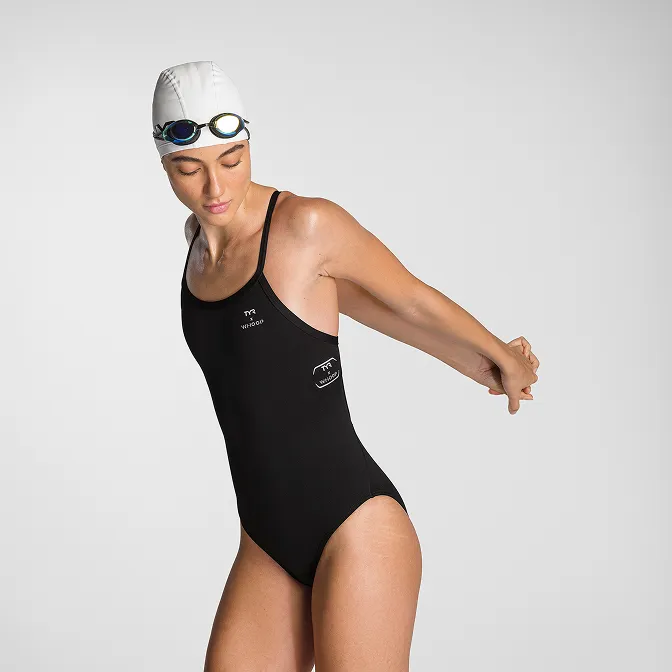
Model photography adds the human element, showing scale, fit, and how a product actually gets used. This matters most for clothing brands planning photo shoots, where seeing a garment on a real person is often what drives the purchase.


Building Your Visual Content Production Workflow
A streamlined workflow keeps bottlenecks out and quality consistent across every deliverable. Start with a clear creative brief: objectives, target audience, key messaging, technical specs.
The essential guide to product photography workflow shows how professional studios structure this, from first consultation through final delivery. That kind of system is what cuts down revision cycles and gets your assets to market faster.
Pre-Production Planning Essentials
Planning decides most of your project's success before a single photo gets taken. Before the camera comes out, you need a shot list, product samples in hand, props and backgrounds chosen, and timing locked in with everyone involved.
Build a production calendar that accounts for:
- Product preparation and cleaning
- Studio booking and setup time
- Photography session duration
- Post-production editing windows
- Client review and revision periods
- Final delivery and asset organization
Communities like Talk Shop offer real insight from e-commerce professionals who've refined their own visual content production through trial and error. Their Shopify-focused community is a good source of practical advice on getting product imagery to convert.
A lot of brands underestimate product preparation. Items need to show up clean, pressed, assembled, and ready to shoot. Getting this right before the shoot starts saves hours in post-production and makes sure your products look their best from the first frame.
Technical Execution and Photography Best Practices
Technical skill is what separates a snapshot from real visual content production. Lighting is the foundation, whether you're working with natural light, continuous LED, or strobes.
The guide to lighting for product photography breaks down how different lighting techniques set the mood and bring out specific product features. Get the lighting right, and you lose the harsh shadows, reveal real texture, and show true color.
Camera Settings and Equipment Selection
Professional visual content production needs the right equipment for the job. Full-frame cameras with high-resolution sensors capture the kind of detail that holds up for large-format prints and digital zoom.
Essential equipment considerations:
- Camera body with manual controls and RAW capability
- Prime lenses (50mm, 85mm, 100mm macro) for sharpness
- Tripod for stability and consistent framing
- Lighting modifiers (softboxes, reflectors, diffusers)
- Color calibration tools for accurate reproduction
Composition is what directs the viewer's eye and builds visual hierarchy. Rule of thirds, leading lines, and negative space all shape how compelling a product image feels. For specialized categories like jewelry photography, the right angle is what reveals cut, clarity, and craftsmanship, the details that actually drive the purchase.
Styling and Composition Strategies
Styling transforms ordinary product photos into aspirational visual content. Flat lay photography arranges products and complementary items in visually pleasing overhead compositions that tell stories and suggest usage scenarios.
Color theory influences viewer psychology and brand perception. Complementary colors create visual interest, while monochromatic palettes communicate sophistication and minimalist product photography aesthetics.
Post-Production and Image Optimization
Raw images rarely represent the final deliverable. Post-production refines visual content through color correction, background removal, retouching, and enhancement.
Professional retouching removes distractions without creating unrealistic representations. This balance maintains authenticity while presenting products in their best light. Advanced techniques include frequency separation for texture preservation, dodge and burn for dimensional enhancement, and precise color grading for brand consistency.
File Formats and Technical Specifications
Different platforms require specific image formats and dimensions. Understanding these e-commerce image standards prevents visual degradation and ensures optimal loading speeds.
The Shopify product image requirements and Amazon product image dimensions guides provide platform-specific best practices that maximize visibility and conversion potential.
File compression balances quality with loading speed. Modern compression algorithms maintain visual fidelity while reducing file sizes by 60-80%, improving page performance without sacrificing image quality.
Integrating AI into Visual Content Production
Artificial intelligence has revolutionized aspects of visual content production, from background removal to style generation. The question of whether brands should use AI product images depends on your specific use case and quality requirements.
AI excels at repetitive tasks like background removal, image upscaling, and basic color correction. Best AI tools for product photos include solutions for automated editing, smart cropping, and even generating lifestyle contexts around existing product shots.
However, AI currently struggles with nuanced creative direction, complex lighting scenarios, and maintaining absolute product accuracy. The impact of AI on visual content and design shows how smart integration of AI tools enhances rather than replaces human expertise.
Effective AI integration strategies:
- Use AI for background removal and basic cleanup
- Employ human photographers for initial image capture
- Apply AI upscaling for multi-resolution outputs
- Leverage AI color correction as a starting point
- Reserve final creative decisions for human review
Understanding visual hierarchy in AI-assisted content helps create more effective compositions, even when using automated tools. The principle remains consistent: guide viewer attention to key product features before adding decorative details.
Scaling Visual Content Production
Growing brands face the challenge of producing more content without sacrificing quality or breaking budgets. Strategic scaling requires systems, templates, and clear communication protocols.
Product photography pricing varies based on volume, complexity, and turnaround requirements. Understanding cost structures helps you allocate resources effectively across your content needs.
Creating Efficient Production Systems
Batch photography sessions maximize efficiency by shooting similar products consecutively. This approach reduces setup time and maintains consistent lighting across product lines.
Volume production strategies include:
- Grouping products by size and background requirements
- Pre-building lighting setups for common product types
- Using digital asset management systems for an organization
- Establishing approval workflows with defined stakeholders
- Creating style guides that ensure visual consistency
The types of product photography your online business needs vary by industry and sales channel. Fashion e-commerce requires different visual content production approaches than electronics or home goods.
Professional studios implement SKU tagging systems that connect images to specific product variants, streamlining inventory management and ensuring accurate product representation across all sales channels.
Measuring Visual Content Performance
Data is what turns visual content production from guesswork into a real strategy. Track click-through rates, conversion rates, time on page, and engagement to see which visual approach your audience actually responds to.
A/B testing different image styles is how you find what works for your specific customers. Test background color, product angles, lifestyle versus catalog shots, and how many images you're running per listing.
Research on how visual formats influence perceived credibility shows that some presentation styles build more trust than others. Use that to sharpen the persuasive power of what you're already shooting.
Platform-Specific Optimization Strategies
Every channel wants something different from your visual content production. Instagram rewards aspirational lifestyle imagery. Amazon shoppers want informative detail shots and multiple angles.
E-commerce product image display tips come back to one thing: the first impression. Your primary image decides whether a shopper clicks through or scrolls past to a competitor.
Color Management and Consistency
Accurate color, across every device and platform, is non-negotiable in professional visual content production. The Academy Color Encoding System (ACES) standards give you a framework for keeping color consistent from production through delivery.
Calibrated monitors mean what you see while editing is what you get in the final output. Color profiles built for each destination, web, print, and mobile, keep accuracy intact across every format.
Color management workflow steps:
- Calibrate all monitors monthly using hardware calibrators
- Shoot with color checker cards for reference
- Apply camera profiles matched to your equipment
- Use consistent color spaces throughout editing
- Test outputs on target devices before final delivery
Inconsistent color chips away at brand credibility and drives up returns when products show up looking different from what customers expected. Real visual content production treats color accuracy as a technical requirement, not a nice-to-have.
Choosing Visual Content Production Partners
Many brands partner with specialized studios rather than building in-house capabilities. Evaluating how to choose the right commercial photography studio involves assessing portfolio quality, production capacity, turnaround times, and communication processes.
Look for studios with category-specific expertise. Jewelry photography demands different skills than clothing model shoots, and experienced specialists deliver superior results in less time.
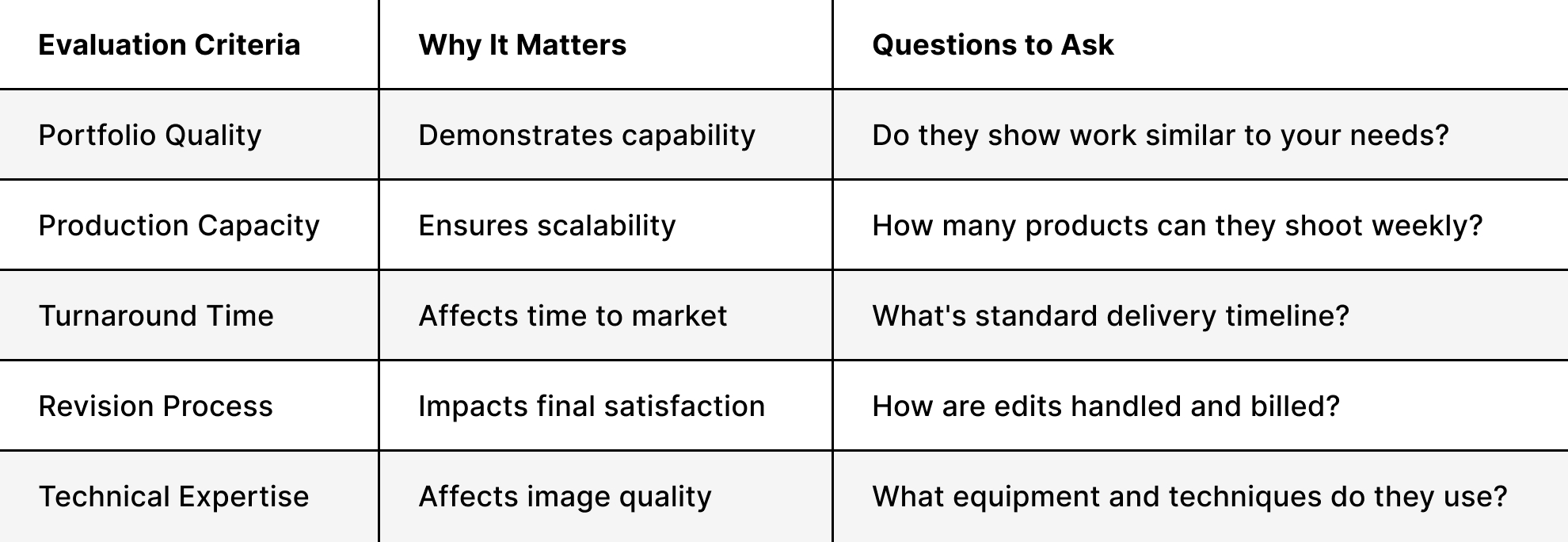
The best product photography services pair technical skill with a process that actually respects your timeline and budget. Clear communication from kickoff through final delivery is what keeps expectations aligned and misunderstandings out of the picture.
Getting visual content production right gives your brand a real edge in a marketplace that runs on visuals. The strategies, workflows, and technical approaches here are a solid foundation for imagery that drives engagement and converts across every channel. When you're ready to bring in professional expertise and a faster turnaround, Squareshot delivers visual content production built around your specific needs, from catalog shots to full creative campaigns that bring your brand to life.
Product A
SQUARE SHOT