


Shooting products with reflective surfaces presents one of the most challenging scenarios in commercial photography. Whether you're photographing jewelry, electronics, glassware, or metallic packaging, managing reflections and glare requires specific techniques and careful planning.
Understanding how light behaves on these surfaces transforms what seems like an impossible task into a controllable, repeatable process that delivers professional results every time.
Understanding Light Behavior on Reflective Materials
Product photography reflective surface work starts with understanding basic physics. Light hitting a reflective surface follows predictable patterns, bouncing off at angles equal to its approach. This means everything in your studio - including you, your camera, and your lighting equipment - can potentially appear in your shot.
The key challenge isn't eliminating reflections entirely. Rather, it's controlling what reflects and where those reflections appear. Professional photographers leverage this understanding to create intentional highlights that enhance product dimensionality rather than distract from the subject.
Types of Reflective Surfaces You'll Encounter
Different materials require different approaches:
- Highly polished metals (chrome, silver, polished steel) create mirror-like reflections
- Brushed or satin finishes scatter light more diffusely while maintaining some reflectivity
- Glass and acrylic create both surface reflections and internal refractions
- Glossy plastics combine partial transparency with surface shine
- Liquid products in clear containers add movement and unpredictability
Each surface type demands customized lighting strategies. Photography surfaces for product work can either complement or complicate these challenges, making surface selection a critical decision in your shooting setup.


The Essential Equipment for Reflective Surface Photography
Building the right toolkit makes product photography challenges manageable. Unlike standard product shoots, reflective work demands specialized modifiers and control equipment.
Lighting Modifiers That Control Reflections
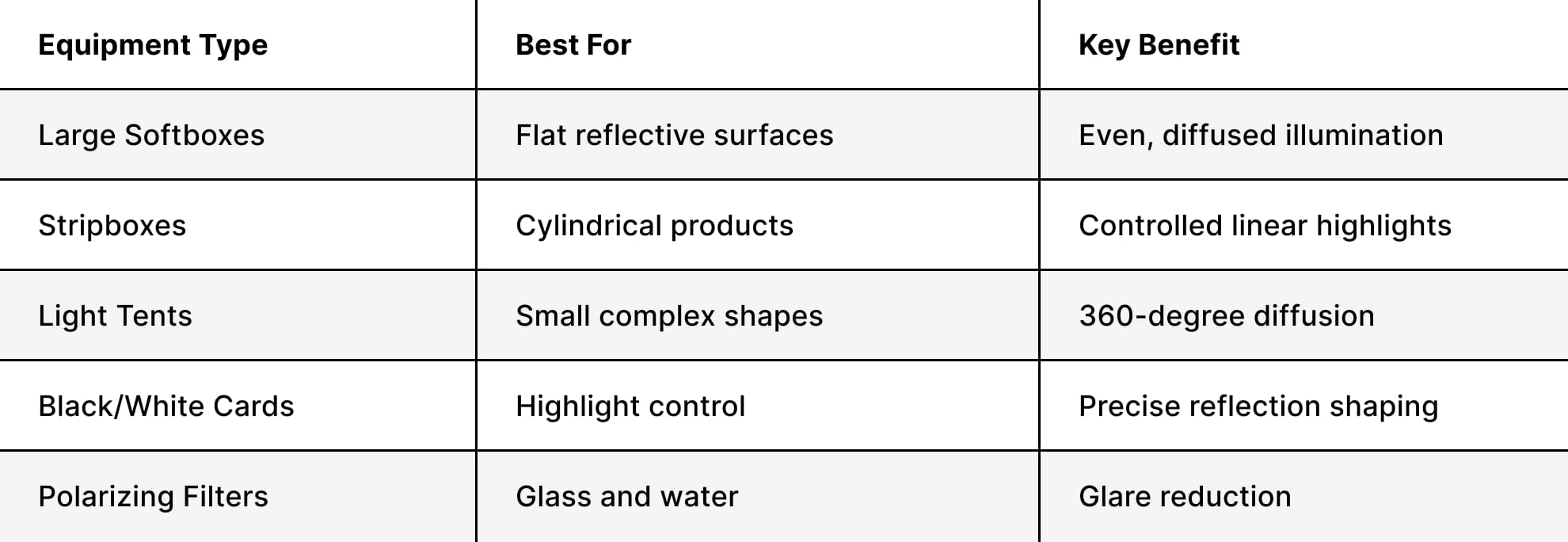
Softboxes become your primary tool, but not just any softbox. Large, diffused sources create gentle, controllable highlights on reflective surfaces. The larger the light source relative to your product, the softer and more manageable the reflection.
Stripboxes excel for cylindrical or elongated products, creating elegant linear highlights. Position them vertically alongside bottles, tubes, or metallic containers to emphasize shape while minimizing unwanted reflections.
Light tents and sweep tables offer 360-degree diffusion, surrounding your product with soft, even illumination. This approach to shooting reflective products works especially well for smaller items where complete environmental control is feasible.
Reflectors and Flags for Fine Control
Quality reflectors serve dual purposes in reflective product work. White reflectors bounce fill light into shadow areas, while black flags (also called "gobos") block unwanted reflections and create definition.
V-flats - large foam core boards joined at right angles - create controlled environments around your product. Position them to define exactly what appears in reflective surfaces, essentially building a mini studio within your studio.
Camera Settings and Positioning Strategies
Technical precision matters enormously when shooting subjects with reflective surfaces. Small adjustments in camera position or settings create dramatically different results.
Aperture Selection for Reflective Products
Use smaller apertures (f/8 to f/16) to maintain sharpness across the entire product. Reflective surfaces amplify any focus issues, making shallow depth of field problematic unless intentionally used for creative effect.
Focus stacking becomes valuable for products with complex three-dimensional reflective surfaces. Capture multiple images at different focus points, then blend them in post-production for edge-to-edge sharpness that's impossible to achieve in a single exposure.
Camera Angle Considerations
Position your camera to minimize direct reflections of studio equipment. Shooting at slight angles rather than perfectly perpendicular often helps, though this depends on product shape and desired composition.
Tethered shooting proves invaluable for reflective work. Real-time review on a large monitor reveals reflection issues invisible on camera screens, allowing immediate adjustments before completing the shot. This workflow integration is essential in professional product photography processes.
Lighting Setups That Tame Reflections
Mastering reflective surfaces in product photography comes down to a systematic lighting approach. These setups provide starting points that you'll adapt to specific products and desired aesthetics.
The Gradient Setup
Create depth by lighting one side more heavily than the other. Position your main light at 45 degrees from the product, with a fill card opposite to control shadow density. This creates a graduated highlight across reflective surfaces that suggests form and dimension.
Black cards placed strategically behind or beside the camera remove unwanted environmental reflections, appearing as controlled dark areas that define product edges. This contrast between highlights and defined shadows communicates three-dimensionality that flat, even lighting cannot achieve.
The Tent Method with Controlled Openings
While light tents provide beautiful, soft illumination, they can create overly flat results. Cut strategic openings in your tent to allow controlled directional light, creating highlights that guide viewer attention while maintaining overall softness.
This hybrid approach combines the glare reduction of complete diffusion with the dimensional modeling of directional light. Managing reflections through controlled lighting environments represents industry best practice for challenging reflective products.
Advanced Techniques for Difficult Products
Some products demand specialized approaches beyond standard setups. Each of these techniques addresses a specific challenge you'll run into with reflective surface product photography.
Cross Polarization for Glass and Water
Polarizing filters on both your light sources and camera lens eliminate surface reflections while allowing light to pass through transparent materials. This technique reveals product details otherwise obscured by glare, particularly valuable for bottles, cosmetics packaging, and clear containers.
Rotate your camera's polarizing filter while reviewing the live view or test shots. At certain angles, surface reflections disappear almost completely, though you'll often want to maintain some reflection to suggest the material's glossy nature.
Gradient Background Reflection Control
The surface beneath your product significantly impacts the final image. Using mirrors strategically in product photography creates intentional reflections that enhance composition, but unintended background reflections can ruin shots.
Controlling background reflections:
- Use matte surfaces when reflections aren't desired
- Choose black acrylic for elegant, controlled reflections
- Apply dulling spray to temporarily reduce unwanted surface shine
- Layer materials to achieve specific reflection characteristics
- Consider floating the product above surfaces using clear supports
Post-Processing for Reflective Products
Even perfectly executed shoots require refinement in post-production. Product photography reflective surface work often involves selective editing to perfect reflections and eliminate unavoidable studio artifacts.
Removing Unwanted Reflections
Clone stamp and healing brush tools remove camera reflections, visible equipment, or environmental elements that appear in highly reflective surfaces. Work methodically, maintaining the natural flow of highlights and reflections while eliminating only distracting elements.
Layer masks allow the selective application of adjustments. Brighten highlights on curved surfaces while maintaining shadow definition elsewhere, or adjust color temperature in specific reflection areas without affecting the entire image.
Enhancing Desirable Reflections
Strategic dodging and burning emphasizes dimensional highlights while suppressing flat areas. This approach aligns with e-commerce image standards that demand both visual appeal and accurate product representation.
Curve adjustments in specific color channels refine metallic tones, ensuring chrome appears neutral, gold reads warm, and copper shows appropriate reddish casts. These subtle refinements separate professional work from amateur attempts.
Material-Specific Shooting Strategies
Different reflective materials present unique challenges requiring tailored approaches. Understanding these distinctions helps you prepare appropriate setups before the shoot begins.
Jewelry and Precious Metals
Jewelry photography demands extreme precision. Small products with complex reflective facets require specialized techniques that avoid common mistakes while showcasing brilliance and detail.
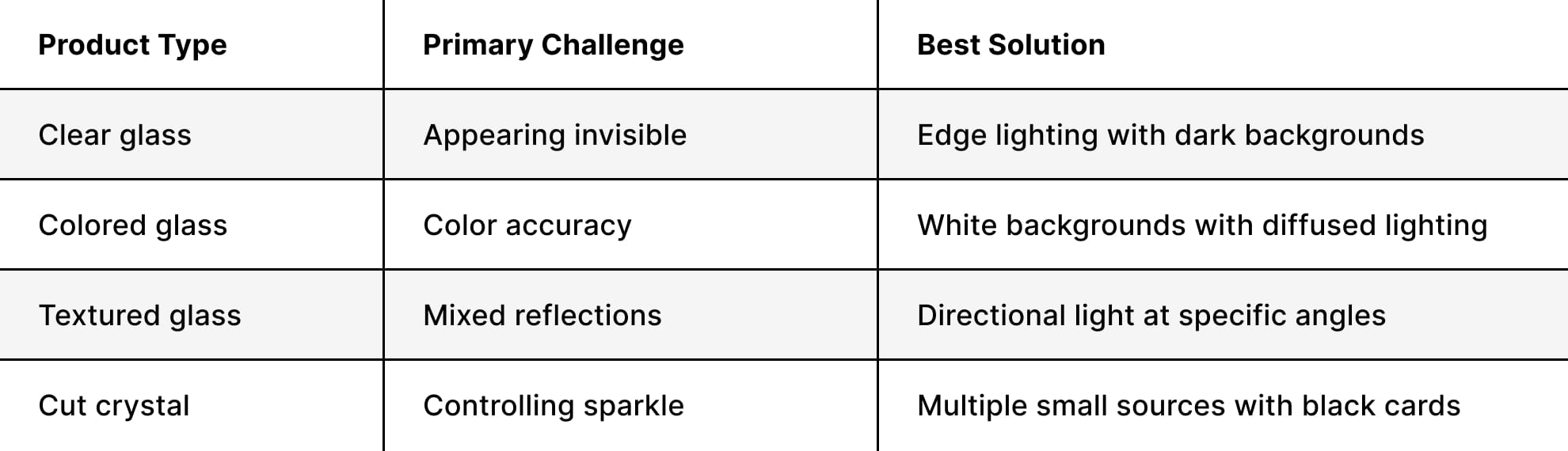
Use multiple small light sources positioned strategically to create sparkle in gemstones without overwhelming metallic elements. Light tents sized appropriately for jewelry create soft overall illumination while strategic openings allow accent lights to add dimension.
Electronics and Glossy Packaging
Modern electronics feature multiple reflective surfaces - screens, glossy casings, metallic accents, and chrome details. Lighting must reveal form without creating hotspots that obscure important features or text.
Position your product at slight angles when possible, allowing screen surfaces to show subtle gradients rather than direct reflections. Creative product photography approaches help differentiate your images while maintaining the clean aesthetic e-commerce requires.
Glassware and Transparent Containers
Glass presents dual challenges - managing surface reflections while ensuring the material reads as transparent. Backlighting helps, creating rim lighting that defines edges and suggests transparency.
Building Consistent Workflows for Client Work
Professional product photography reflective surface work requires repeatable processes that deliver consistent results across product lines and shooting sessions.
Setup Documentation
Photograph your lighting setup from multiple angles for each product type. Document light positions, modifier choices, camera settings, and any specialty equipment. This reference library allows quick setup replication and helps team members achieve consistent results.
Create naming conventions for different setup configurations. "Jewelry-Gradient-01" or "Glass-Backlit-02" immediately communicates the approach, streamlining communication and setup time on future shoots.
Client Communication About Reflective Challenges
Talking clients through the realities of reflective surface product photography saves everyone time and disappointment. Explain that perfect reflection elimination often creates lifeless images that don't communicate material quality effectively.
Show before-and-after examples demonstrating how controlled reflections enhance rather than detract from products. This positions you as an expert partner rather than simply a service provider, building trust that supports higher rates and ongoing relationships.
Understanding appropriate pricing for product photography helps both photographers and clients establish fair project budgets.
Seasonal and Trend Considerations for 2026
Current e-commerce trends emphasize environmental consciousness and authentic representation. Product photography reflective surface work in 2026 increasingly showcases sustainable materials and natural finishes rather than highly polished perfection.
Trending reflective product categories:
- Brushed and matte metallic finishes replacing chrome
- Recycled glass packaging with intentional imperfections
- Bio-based glossy plastics with unique reflection characteristics
- Hammered and textured metals showing craft heritage
- Natural stone and mineral elements in product design
These trends require photographers to adapt traditional reflective surface techniques, often embracing texture and variation rather than pursuing flawless uniformity. Planning your e-commerce photography budget should account for these material complexities.
Troubleshooting Common Reflection Problems
Even experienced photographers encounter challenging situations. Recognizing common issues and their solutions accelerates problem-solving during shoots.
Ghosting and Double Reflections
Multiple light sources create overlapping reflections that confuse product form. Systematically turn off lights one at a time to identify the problematic source, then adjust position or intensity rather than adding more diffusion.
Unwanted Color Casts in Reflections
Colored walls, equipment, or clothing can reflect into products, creating unexpected color contamination. Dress in neutral colors during shoots, and use black or white studio walls. Techniques for creating reflections should be intentional rather than accidental.
Loss of Product Definition
Over-diffusion creates beautiful soft light but can eliminate the edge definition necessary for products to "pop" against backgrounds. Strategic negative fill using black cards restores dimensionality without introducing harsh shadows.
Adapting Techniques Across Product Categories
The fundamental principles of product photography work apply universally, but implementation varies significantly across product types and industries.
Fashion accessories often combine multiple materials - polished metal hardware on matte leather, glossy patent finishes with metal zippers. Each element requires consideration in your lighting approach. E-commerce fashion photography strategies address these multi-material challenges while maintaining style consistency.
Beauty products present unique packaging challenges with frosted glass, metallic accents, and glossy caps all in a single product. Lighting that works for the container might not suit the cap, requiring composite approaches or careful positioning that finds acceptable compromises.
Home decor items increasingly feature mixed materials and finishes. A single product might combine brushed brass, clear glass, and matte ceramics. Inspiring approaches to home decor photography showcase creative solutions that honor each material while maintaining a cohesive visual presentation.
Platform-Specific Optimization
How you handle reflective surface product photography often comes down to which e-commerce platform you're shooting for. Understanding these specifications ensures images perform optimally across channels.
Amazon's strict requirements emphasize clean white backgrounds and specific image dimensions. Meeting Amazon product image requirements while managing reflective surfaces requires careful planning, as pure white backgrounds can complicate reflection control compared to gradient approaches.
Shopify offers more creative flexibility but still demands technical excellence. Understanding Shopify product image specifications helps you plan shoots that satisfy platform standards while showcasing reflective products effectively.
Mastering product photography reflective surface techniques opens opportunities to shoot the most challenging and often highest-value products in commercial photography. The combination of technical knowledge, systematic workflows, and problem-solving skills distinguishes professional photographers from hobbyists.
Whether you're building an in-house photography capability or need expert support for reflective product challenges, Squareshot delivers the specialized expertise and production quality that demanding projects require, with experienced teams who understand both the technical requirements and tight timelines that e-commerce businesses face every day.
Product A
SQUARE SHOT