

Product images aren't decoration. They're the closest thing to a sales floor you have. In e-commerce, your photography does the job a retail associate used to do: it answers questions, builds trust, and closes the sale. Get it wrong and you lose customers before they've read a single line of copy.
The Psychology Behind Visual Commerce
The human brain processes images faster than text. That's the reason high-quality product images drive purchasing decisions more than any other single factor in e-commerce. When shoppers can't pick up, touch, or try your product, visuals carry the entire sensory load. Professional photography fills that gap. Everything else is guesswork.
A shopper searches, sees a thumbnail, and decides whether to click. That's your window. One image. Three seconds.
Poor photography signals a poor product, regardless of what's actually in the box. That perception costs you sales you'll never know you lost. Strong visuals do the opposite: they create brand confidence that carries across your entire catalog.
The Business Case for Better Photography
Products with high-quality images see conversion rates higher than those with substandard visuals. For a business doing $100K a month, that's not an incremental improvement — it's nearly doubling revenue without spending another dollar on traffic.
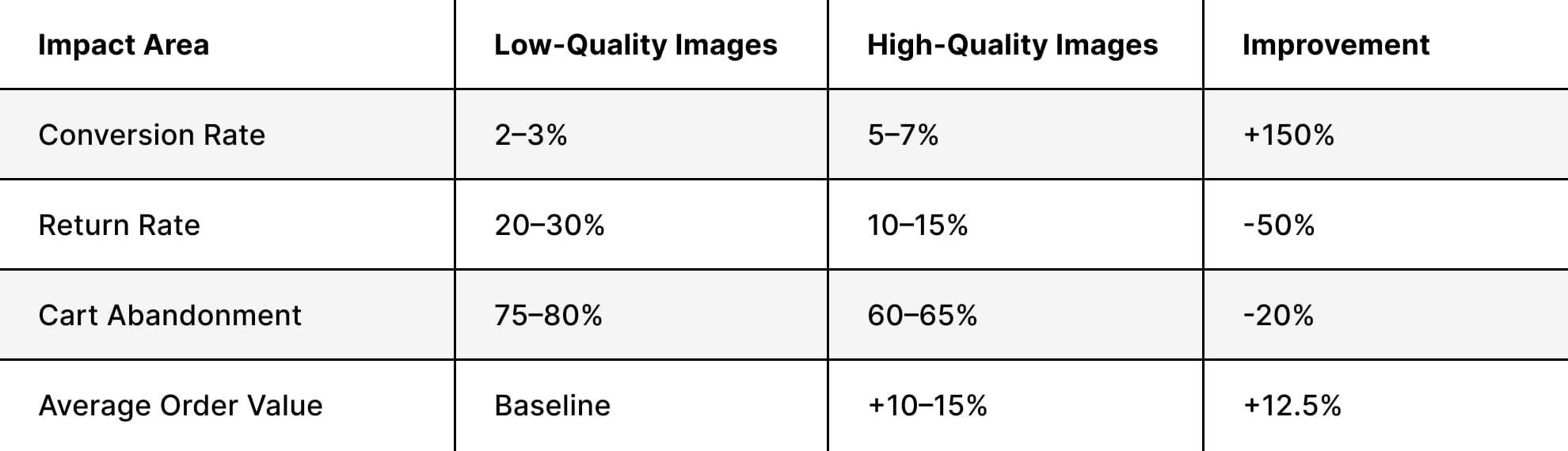
Returns drop when customers receive exactly what they expected. That dual benefit — more sales, lower costs — makes professional photography one of the highest-ROI investments an e-commerce brand can make.
How Many Images Do You Need?
Single-image listings are leaving money on the table. Shoppers expect to see the full picture. Platforms with strong visual merchandising strategies consistently outperform those with minimal image sets.
Optimal image counts by category:
- Apparel: 5–8 (front, back, side, detail shots, model shots)
- Electronics: 6–10 (all angles, ports, interfaces, packaging, scale)
- Home decor: 4–7 (multiple angles, room settings, texture details)
- Beauty: 5–7 (packaging, product, texture, application, results)
Each additional quality image can lift conversion 3–5%. After 8–10, returns diminish. The goal isn't volume — it's giving shoppers everything they need to say yes.
Trust Is Built Visually
Consumers are more skeptical than ever. They've learned to spot stock images, dropshipped listings, and amateur photography from a mile away. Professional, consistent photography signals you're a legitimate operation with real inventory and real standards.
Detailed imagery — showing products from every angle, not hiding imperfections — actually increases conversion because it signals transparency. According to research on product imagery impact, professional visuals can reduce perceived purchase risk by up to 40%.
Brands that invest in professional photography typically see:
- Higher time-on-page
- More email sign-ups
- Better engagement on social media
- Stronger reviews
- Fewer customer service inquiries
Technical Standards That Actually Matter
Great photography starts before post-production. But technical execution still determines whether images perform in the wild.
Resolution and File Size
You need minimum 2,000px on the longest edge to support zoom functionality — and zoom increases conversions 20–30%. But resolution alone isn't enough. Oversized files kill product page speed, which kills rankings and UX. Target 100–300KB after compression using modern file formats like WebP.
E-commerce image standards continue to evolve, but starting with properly lit, professionally shot images ensures your assets hold up regardless of how platforms process them downstream.
Consistency Across Your Catalog
Visual inconsistency creates friction. When images across your catalog don't match because of different lighting, backgrounds, crop ratios, it erodes trust and slows down purchase decisions. Consistency signals that you operate at scale and take your brand seriously.
Non-negotiables:
- Uniform background color and treatment
- Consistent lighting direction and quality
- Standardized product positioning and orientation
- Matched shadow treatment
- Identical aspect ratios


This is one area where working with professional communities and established studios pays dividends — consistency at volume is hard to maintain without a reliable system.
Mobile Isn't a Secondary Channel
Mobile commerce accounts for over 70% of e-commerce traffic. Your images need to work in a thumbnail and as a full-screen hero. They need to communicate instantly in a crowded feed. They need to survive a pinch-to-zoom.
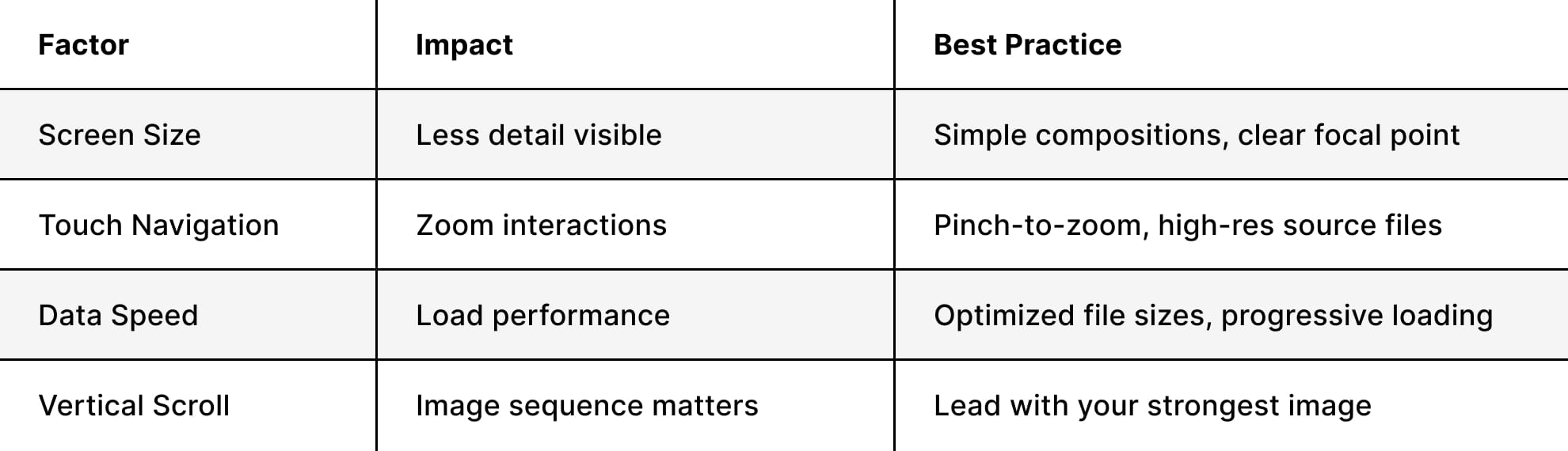
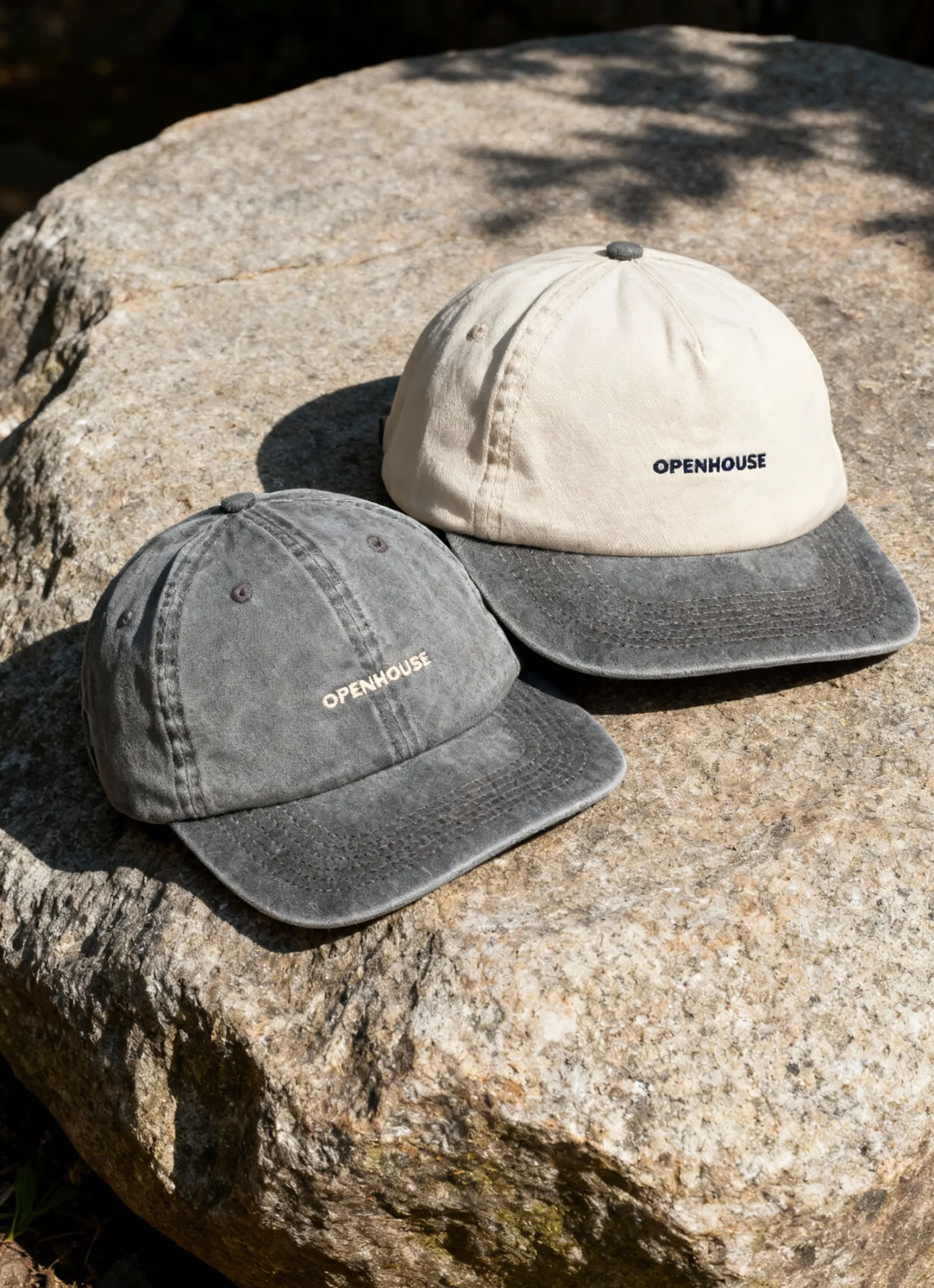
Choosing the right background color becomes especially critical at mobile scale, where surrounding UI elements compete for attention. High contrast between product and background isn't aesthetic preference — it's a conversion lever.
Category-Specific Requirements
What works for a hoodie won't work for a blender. Photography approach needs to match what customers need to know.
Fashion and Apparel
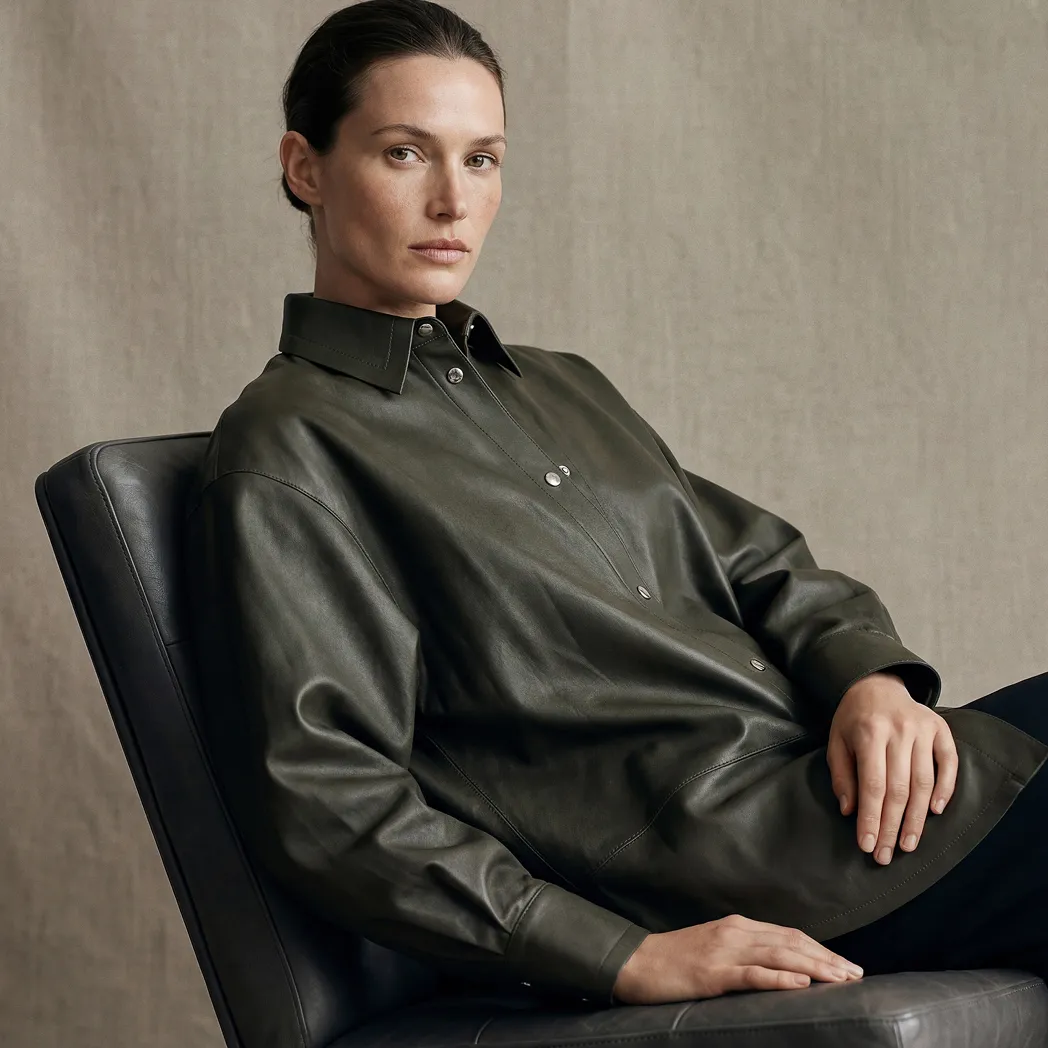
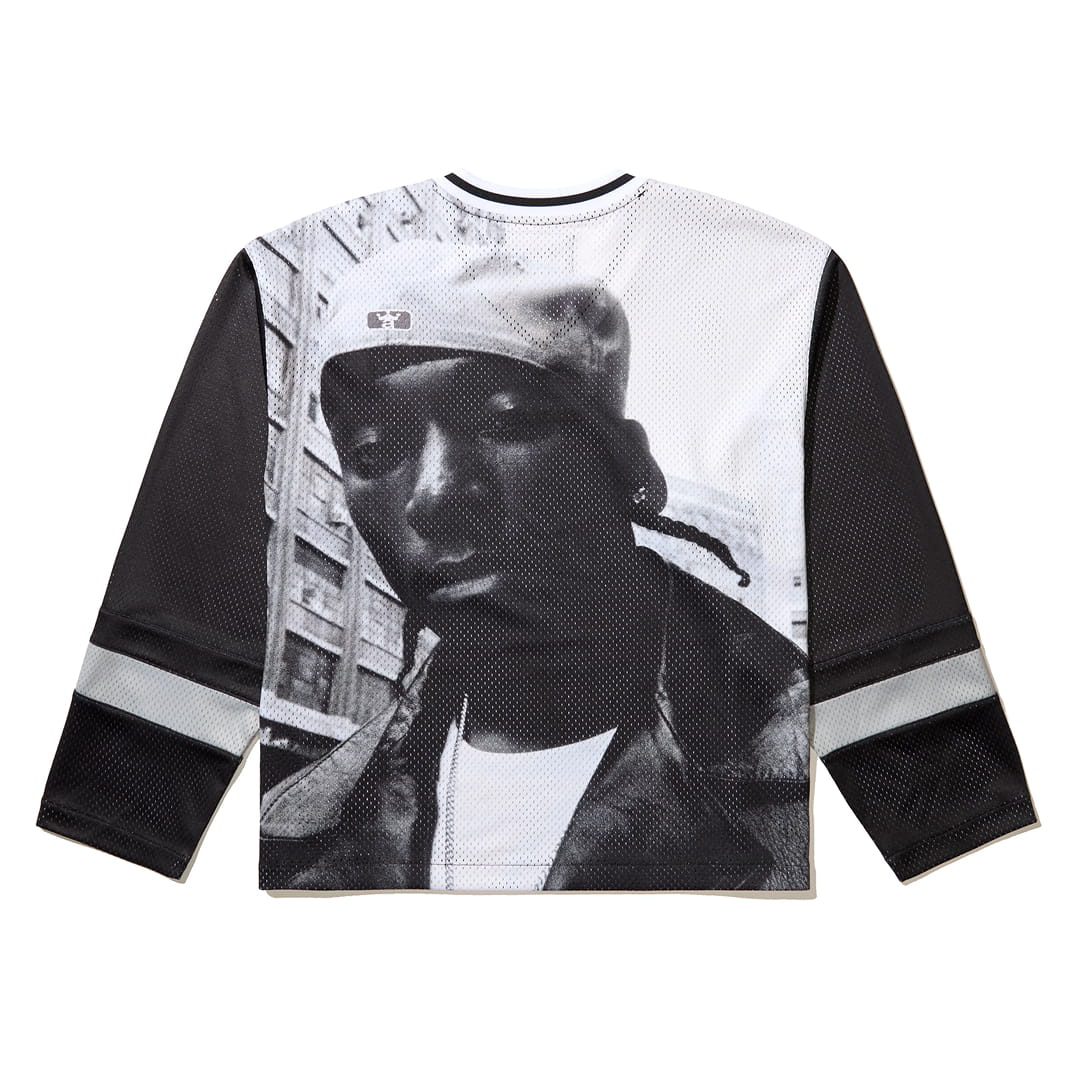
Fit, drape, movement — these are what sells clothing. Flat lays have their place, but model shots convert better. Ghost mannequin techniques offer a practical middle ground. And lighting isn't secondary here: proper apparel photography lighting reveals fabric texture and true color in ways that prevent returns.
Electronics and Technical Products
Ports, buttons, screen quality, scale — all of it matters. Customers need to know dimensions before they buy. Show your product next to familiar objects. Remove the uncertainty and you remove the hesitation.
Home Decor and Furniture
Scale and context are everything. A vase without a size reference could be a centerpiece or a dollhouse prop. Home decor product photography benefits from both clean hero images and styled room contexts. Show the product in a real setting and you're not just selling the object — you're selling the room.
The ROI Calculation
Professional photography involves real costs: studio time, styling, model fees, retouching, coordination. But the return components more than cover it.
What you spend:
- Professional photography (per product or day rate)
- Styling and props
- Model fees where applicable
- Post-production
- Project management
What you get back:
- Higher conversion rates
- Lower return rates
- Higher average order values
- Better organic search rankings
- Stronger paid ad performance
- Compounding brand equity
A brand with 100 SKUs at $50 average order value and 1,000 monthly visitors per product, moving from 2% to 4% conversion, generates $1,000 more per SKU per month. At $200 per product for professional photography, payback happens in weeks. Then the images keep working indefinitely.
Images Are Permanent Assets
Unlike ad spend, quality product photography doesn't stop working when the budget runs out. Once created, images serve your website, Amazon, social commerce, email, digital ads, and wholesale decks simultaneously. That multiplier effect is what makes photography one of the few marketing investments with genuinely compounding returns.
Platform-Specific Optimization
Every channel has its own requirements. Knowing Amazon product image dimensions and Shopify product image requirements isn't optional — it's table stakes for multi-channel operations.
Platform quick reference:
- Amazon: 1,000px minimum, pure white background (RGB 255,255,255), product fills 85% of frame
- Instagram Shopping: Square (1:1), lifestyle context, product clearly visible
- Pinterest: Vertical (2:3), lifestyle and contextual shots perform best
- Google Shopping: Clean backgrounds, accurate color, multiple angles preferred
- Your own site: Maximum flexibility, but consistency with marketplace listings builds cross-channel trust
Shoot once. Adapt for each platform. Don't re-shoot.
Professional + User-Generated: Use Both
UGC and professional photography aren't competing strategies — they serve different jobs. Professional images establish quality, set the visual standard, and communicate brand identity. Customer photos provide real-world validation and social proof.
The most effective brands combine both: studio shots create initial interest; customer photos eliminate final hesitation. The impact of product visuals on purchasing decisions extends across the entire visual ecosystem, not just your hero images.
Advanced Techniques Worth the Investment
Once your standard photography is locked in and consistent, the next question is where to push further. These techniques aren't for every brand or every product — but for the right categories, they move the needle significantly.
360-Degree Spins
Interactive 360-degree views let shoppers inspect a product the way they would in-store: turning it over, checking the back, examining the details. It requires specialized equipment and more production time, but the payoff is real. Conversion lifts make it a straightforward ROI case for higher-ticket items where purchase hesitation runs high.
Augmented Reality
AR previews, letting customers place furniture in their own rooms or try on glasses before buying, are moving from novelty to expectation in certain categories. What felt like a gimmick three years ago is now a purchase driver. Brands that built AR capabilities early are already seeing the competitive advantage — lower return rates, higher confidence at checkout, and a differentiated browsing experience that keeps shoppers on-site longer.
Product Video
A 15–60 second product video demonstrating features, movement, or real-world scale can increase conversion by an additional 80%, according to product imagery research. Video answers questions that static images can't — how a jacket moves, how a drawer slides, how small a product actually is. It doesn't replace photography. It extends it, covering the gaps that even a ten-image set leaves open.
Treat Photography as a System, Not a Task
Ad hoc photography is expensive, inconsistent, and hard to scale. The brands that win treat it as an operational workflow: standardized shot lists by category, efficient batch scheduling, clear asset naming conventions, defined approval processes, and delivery systems that integrate with existing tools.
Systematic photography improves quality and reduces per-image cost as you scale.
Measure What's Working
Photography investment should be data-driven. Track:
- Conversion rate by image count
- Engagement metrics (time on page, zoom usage, image cycling behavior)
- Heat map data on which images get attention
- A/B test results comparing different photography approaches
- Return rates correlated with image quality
- Social performance by image type
Heat map data often reveals that detail shots outperform hero images for customers deep in the purchase journey. That insight changes how you prioritize your shot list and where your budget goes.
What's Coming
AI tools for product photos are accelerating: background removal, retouching, and variation generation are already faster and cheaper than they were two years ago. But AI works best on top of professionally shot source material. The fundamentals such as lighting, composition, accurate color, detail — still require expertise and proper equipment.
Emerging capabilities to track: personalized product visualization, shoppable video, dynamic image optimization by device and context, and automated lifestyle scene generation.
Quality product photography drives measurable results across conversion, returns, customer satisfaction, and brand perception. It's not a creative expense, it's a revenue driver. Squareshot delivers high-quality product photography with fast turnaround across catalog, creative, and model shoots, built around what your brand actually needs.
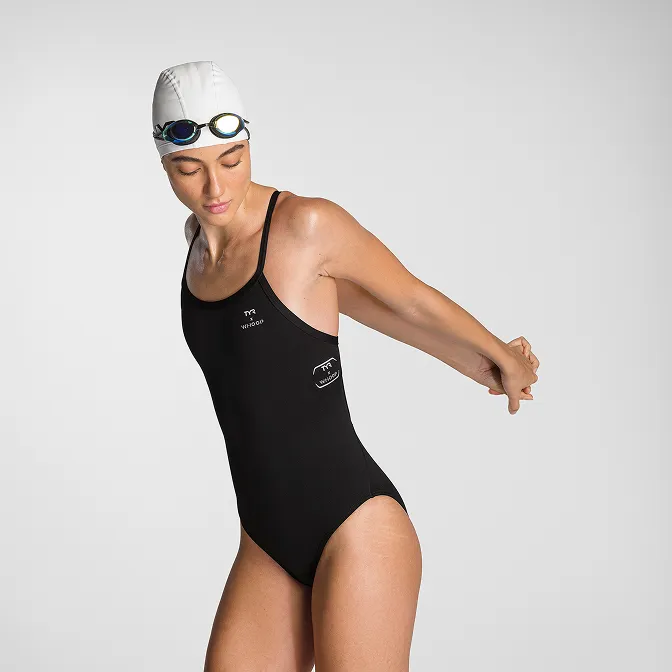
Product A
SQUARE SHOT