

Product images are doing more selling work than ever. Across every channel, PDP, social, marketplace, ad unit, the image is often the only thing standing between a customer and a purchase decision.
Getting that right isn't about having the most expensive equipment. It's about understanding which variables actually affect output quality, and building a setup that controls them consistently. This guide covers the essentials: what equipment matters and why, which techniques produce reliable results, and how to structure a workflow that holds quality across an entire catalog and not just a single hero shot.
Camera Equipment That Forms Your Foundation
Your camera is the heart of any product photography setup, but you don't need to spend a fortune to get started. Modern mirrorless cameras and DSLRs offer excellent image quality at various price points.
Key features to prioritize:
- Manual control over aperture, shutter speed, and ISO
- High resolution (minimum 16 megapixels, ideally 24+)
- Tethering capability for live previews
- RAW file format support
The sensor size matters more than megapixels for most product work. Full-frame cameras provide superior low-light performance and shallower depth of field control, but APS-C sensors deliver excellent results for most product photography needs.
Digital Camera World's comprehensive camera guide breaks down options across different budgets and shooting styles.
Lenses That Capture Every Detail
Your lens selection directly impacts image sharpness, distortion control, and shooting flexibility. For product photography, prime lenses often outperform zooms in terms of sharpness and light-gathering ability.
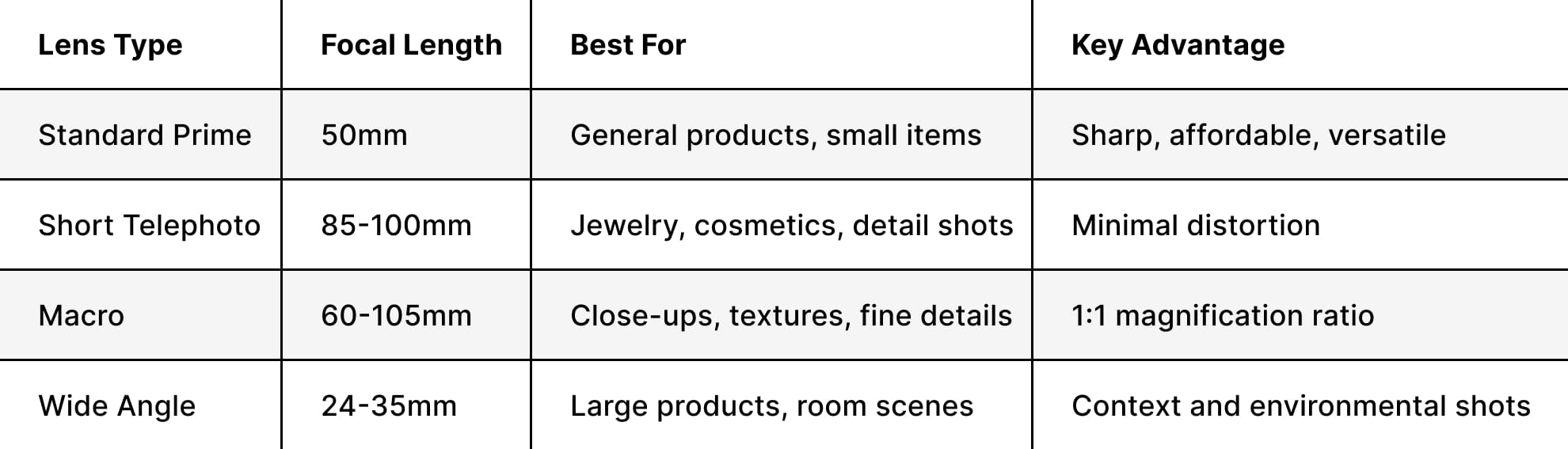
A 50mm f/1.8 lens represents one of the best value investments among the essentials for product photography. This combination provides sharpness, speed, and versatility at an accessible price point. For specialized work like close-up product photography, a dedicated macro lens becomes indispensable.
Lighting Systems That Shape Professional Results
Lighting separates amateur product photos from professional imagery. Natural light can work for certain aesthetic approaches, but controlled artificial lighting provides consistency and repeatability.
Essential lighting components include:
- Key light: Your main light source that defines the product's form
- Fill light: Softens shadows and reduces contrast
- Rim/back light: Separates the product from the background
- Background light: Ensures pure white backgrounds when needed
Continuous LED lights have gained popularity in 2026 for their "what you see is what you get" approach. However, strobe lights remain the professional standard for their power, color accuracy, and ability to freeze motion. Fotor's equipment breakdown offers practical guidance on building your lighting kit progressively.
Light Modifiers That Control Quality
The modifier you place in front of your light matters as much as the light itself. Softboxes create broad, even illumination perfect for most products. Beauty dishes work wonderfully for cosmetics and beauty products. Reflectors and flags help you shape light precisely.
White reflectors bounce soft fill light into shadow areas. Black flags subtract light to deepen shadows and add drama. A 5-in-1 reflector kit provides multiple options in a portable package, making it one of the most versatile essentials for product photography.
Backgrounds and Surfaces That Frame Your Subject
Your background choice communicates brand identity and keeps the viewer's focus on the product. White backgrounds dominate e-commerce for their clean, distraction-free presentation. Amazon product image standards specifically require pure white backgrounds for main product images.
Background options to consider:
- Seamless paper: Affordable, available in dozens of colors, easy to replace
- Acrylic sheets: Create clean reflections, modern aesthetic
- Wood surfaces: Add warmth and texture for lifestyle shots
- Fabric backdrops: Introduce softness and depth
- Custom vinyl: Branded or specialty patterns
For reflective products, a sweep (curved background) eliminates the horizon line and creates seamless integration between product and background. This technique is essential when photographing items like beauty products or glassware.


Support Equipment That Ensures Stability
Camera shake destroys image sharpness, making a solid tripod non-negotiable among the essentials for product photography. Look for tripods with:
- Three-section legs for height adjustment
- Center column hook for adding weight/stability
- Quick-release plate for fast camera mounting
- Adjustable legs for uneven surfaces
A sturdy tripod enables longer exposures for maximum depth of field and lowest ISO settings. This combination produces the sharpest possible images with minimal noise. For overhead shots popular in flat-lay product photography, a boom arm or horizontal column adds valuable versatility.
Shooting Tables and Prop Stands
Dedicated shooting surfaces elevate your workflow. Light tables with built-in illumination create glowing backgrounds perfect for transparent products. Adjustable product stands position items at optimal angles. For brands focusing on sustainable products, natural wood surfaces, and organic textures align with eco-conscious brand values while showcasing items effectively.
Digital Workflow Tools That Streamline Production
Software forms the invisible infrastructure of modern product photography. Tethering software connects your camera to your computer, enabling real-time image review on a large screen. This immediate feedback catches focus, exposure, or styling issues before you pack up your set.
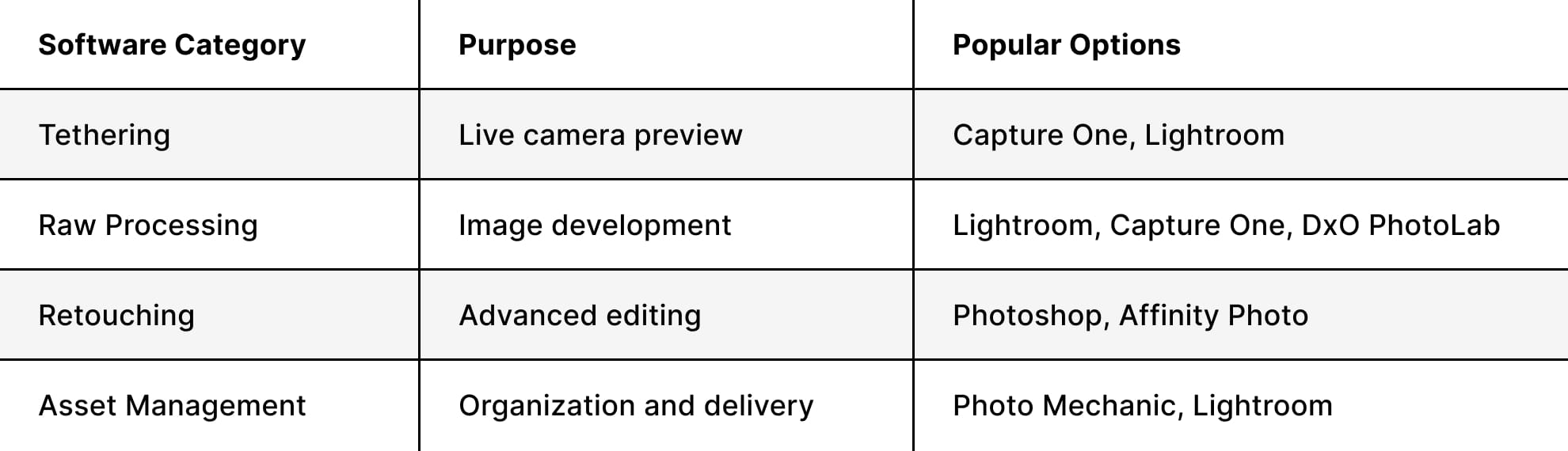
The rise of AI tools in 2026 has transformed post-production efficiency. While questions remain about whether brands should use AI product images for final delivery, AI-powered retouching tools excel at repetitive tasks like background removal and color correction.
Lighting Accessories That Fine-Tune Control
Beyond basic lights, specialized accessories expand your creative control. C-stands provide rock-solid support for lights, modifiers, and flags. Their adjustable arms position the equipment exactly where needed. Sandbags stabilize light stands and prevent expensive equipment from toppling.
Additional lighting essentials:
- Sync cords or wireless triggers for off-camera flash
- Light meters for precise exposure measurement
- Color checker cards for accurate white balance
- Diffusion materials for softening harsh light sources
Props and Styling Tools That Add Context
Context sells products by showing scale, use cases, and lifestyle integration. Your prop collection should align with your brand aesthetic while remaining secondary to the product itself.
Essential styling tools include:
- Tape varieties (double-sided, masking, painter's) for positioning
- Fishing line or wire for suspended product shots
- Clamps and clips for fabric manipulation
- Gloves to prevent fingerprints on glossy products
- Cleaning supplies (microfiber cloths, compressed air, lens cleaner)
Styling boards or sweeps in complementary colors create visual interest without competing for attention. The e-commerce image standards that drive sales often combine clean main images with styled lifestyle shots that tell a product story.
Storage and Organization Systems
Professional product photography generates massive file libraries. External hard drives or network-attached storage (NAS) systems protect your work while keeping it accessible. Follow the 3-2-1 backup rule: three copies of your data, on two different media types, with one copy off-site.
Organization best practices:
- Consistent folder naming conventions
- Metadata tagging by product category, SKU, or shoot date
- Color-coded rating systems for selects
- Cloud backup for critical files
Understanding proven e-commerce image management strategies prevents the chaos that derails productivity as your catalog grows. Whether you're shooting ten products or ten thousand, systematic organization remains among the critical essentials for product photography.
Color Management Tools for Accuracy
Accurate color reproduction builds customer trust and reduces returns. Color management starts with camera calibration using a color checker card during each shoot. This reference ensures consistent color across different lighting conditions.
Monitor calibration devices like X-Rite ColorMunki or Datacolor SpyderX guarantee your screen displays accurate colors. Without calibration, you might adjust images that look perfect on your monitor but appear completely different to customers.
For brands exploring types of e-commerce images, maintaining color consistency across hero images, detail shots, and lifestyle photos creates a cohesive visual brand experience.
Measurement and Reference Tools
Professional product photography demands precision. Digital calipers measure product dimensions for accurate scaling in composite images. Gray cards establish neutral white balance references. Rulers or scale objects in test shots confirm perspective accuracy.
Reference tools to maintain:
- White, gray, and black balance cards for exposure and color
- Ruler or measuring tape for positioning consistency
- Level (bubble or digital) for horizontal alignment
- Shot lists and lighting diagrams for repeatable setups
These tools might seem minor, but they ensure consistency across hundreds or thousands of product SKUs. When examining product photography rates for large catalogs, efficiency gains from systematic processes dramatically impact project timelines and costs.
Safety and Maintenance Equipment
Protecting your investment requires regular maintenance. Sensor cleaning kits prevent dust spots that plague product images. Lens cleaning solutions and microfiber cloths maintain optical clarity. Silica gel packets in camera bags fight moisture in humid environments.
Safety essentials include:
- Surge protectors for expensive lighting and computers
- Cable management systems to prevent tripping hazards
- Fire extinguisher rated for electrical fires
- First aid kit for minor studio accidents
Professional studios maintain equipment logs tracking service dates, calibration schedules, and warranty information. This documentation protects significant equipment investments that form the foundation of your product photography capabilities.
Building Your Kit Strategically
Not every photographer needs every piece of equipment immediately — start with core essentials and expand as your skills and business grow.
Recommended acquisition order:
- Phase 1: Camera, standard lens, tripod, basic continuous lights
- Phase 2: Light modifiers, white background, reflectors
- Phase 3: Additional lenses, strobe lights, backdrop variety
- Phase 4: Specialized tools, advanced modifiers, tethering setup
This phased approach prevents overwhelming initial investment while building capabilities aligned with client demand. Many successful product photographers rent specialized equipment for specific projects rather than purchasing items used infrequently.
The essentials for product photography evolve with your business needs. Understanding how Squareshot's services work reveals how professional studios scale equipment investments across diverse client requirements, from catalog photography to creative concept shoots.
Mastering product photography comes down to two things: the right equipment and the knowledge to use it. Build your toolkit with intention, develop the technical fundamentals, and the results follow consistently.
If you're scaling faster than an in-house setup can support, Squareshot handles the full production pipeline, from shoot to delivery, with output built around your brand standards and timeline.
Product A
SQUARE SHOT